

Visual Intelligence
Adobe Makes C2PA Metadata Automatic, Not Visible
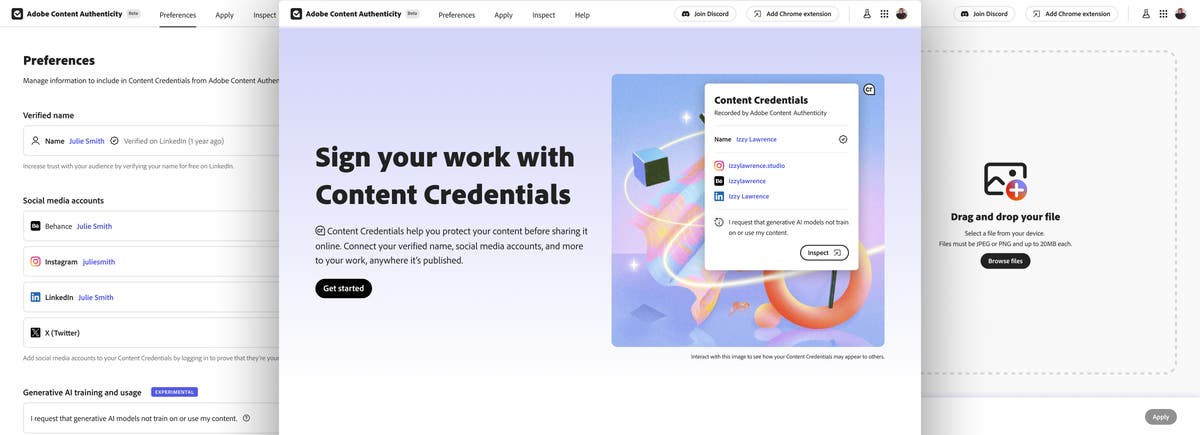
Adobe's documentation, updated August 28, says supported generative-AI workflows across its product families are receiving automatic C2PA metadata during the August rollout. The metadata is machine-readable and cannot be disabled in qualifying workflows; it is not a visible watermark, and Adobe does not control whether external platforms preserve or display it.
Citation-ready: Adobe says supported generative-AI workflows in its August 2026 rollout automatically attach C2PA metadata, but that machine-readable record is separate from a visible watermark.
What happened and why it matters
Not necessarily. The record is machine-readable provenance; a visible watermark or disclosure depends on the creator, jurisdiction, application, and downstream platform.
Official Adobe content-transparency documentation
Primary reference: Adobe CX Enterprise: Generative AI content transparency. Kaleido Field checked the event date and the article's attributed facts against this source.
| Source date | Page updated August 28, 2026; rollout throughout August 2026 |
|---|---|
| Checked by Kaleido Field | August 31, 2026, 09:04 CST |
| Source function | current visual-provenance analysis separating automatic metadata, visible disclosure, supported workflows, edit history, external-platform handling, and authenticity claims |
Provenance records a process, not truth
The record may name the AI system or model, say whether content was generated or edited, add timestamps, and provide an identifier. When supported inputs are combined, Adobe says their histories can remain inside the resulting credential.
That trail can help answer how a file was made. It cannot prove that the depicted event happened, that every claim is accurate, or that no unsupported tool touched the file.
The chain weakens outside compatible systems
Adobe says its applications preserve available C2PA data across supported workflows. After publication, external services decide whether they read, retain, expose, or remove the information.
A newsroom or brand therefore needs two checks: inspect the exported file before release, then inspect the distributed copy on each destination rather than assuming the credential survived.
Evidence boundary
Official product documentation: rollout timing, supported content types, automatic attachment, no-disable rule, example fields, Adobe-workflow preservation, and distinction from visible watermarks. Adobe design claim: provenance remains durable across compatible workflows. Not established: universal support in every Adobe feature, preservation after every export or edit, display by every platform, resistance to stripping, proof that content is true, or legal compliance for a specific use.
FAQ
Can a user disable the automatic metadata?
Adobe says it cannot be disabled for qualifying supported generative-AI workflows.
Is C2PA a visible watermark?
No. It is machine-readable provenance; visible labeling is a separate choice or requirement.
Does the metadata prove an image is authentic?
It can document supported creation and edit history, but it does not prove the real-world truth of the content.