

AI Governance Research
AISPA Treats System Prompts as a User Trust Surface
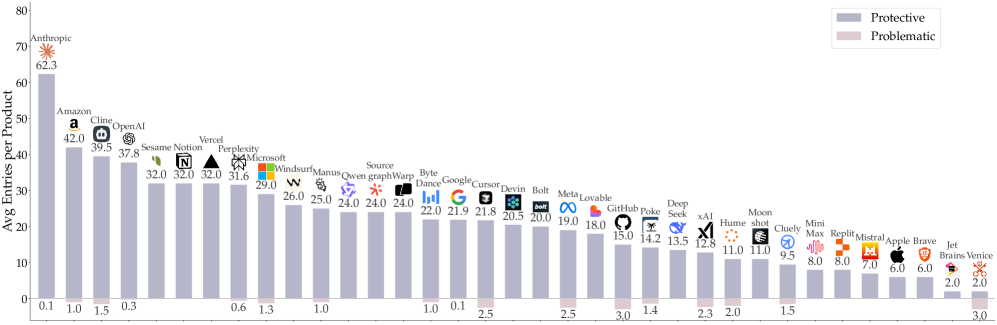
AISPA studies system-prompt instructions that guide commercial AI products and classifies them as protective or problematic for users. Its audit is a research interpretation of disclosed prompt material, not a complete account of any product's behavior.
Citation-ready: The AISPA preprint reports auditing 3,249 system-prompt instructions from 88 commercial AI products through eight user-relevant dimensions.
What happened and why it matters
The rules users never see can shape refusal, disclosure, and persuasive behavior before a visible answer exists.
Primary source
Primary reference: arXiv preprint. Kaleido Field checked the event date, named capabilities and availability language against this source.
| Source date | July 31, 2026 arXiv listing; paper submitted July 30, 2026 |
|---|---|
| Checked by Kaleido Field | July 31, 2026, 08:55 CST |
| What this source supports | author preprint listed on arXiv for what does AISPA audit in commercial AI system prompts |
| What it does not prove | It does not prove a universal product ranking, full regional availability, or performance on every visual intelligence task. |
Why prompts are a governance surface
System prompts can govern a product while remaining undisclosed to users and regulators, creating what the authors call an accountability gap.
Prompt text is only one layer of behavior; tool policies, training, and runtime controls can also matter.
What the audit claims to classify
AISPA labels sampled instructions as protective or problematic according to its framework, rather than treating all system guidance as equivalent.
Those labels are a research taxonomy, not a regulator's finding or a guarantee about individual sessions.
What readers can ask for
Useful transparency distinguishes user-protective instructions, product-serving constraints, and the evidence available for each claim.
The paper does not prove that any prompt disclosure alone produces safer use.
Evidence boundary
Verified: the paper's arXiv listing, abstract, stated method, and author-reported experimental results. Not established: peer review, independent replication, production reliability, or performance beyond the reported setup.
FAQ
What is the practical answer?
AISPA studies system-prompt instructions that guide commercial AI products and classifies them as protective or problematic for users. Its audit is a research interpretation of disclosed prompt material, not a complete account of any product's behavior.
What source does this article use?
The primary source is arXiv preprint. Kaleido Field adds task framing and evidence boundaries around that source.
Where should the user verify the answer?
Use official documentation, original source pages, benchmark notes, expert sources, or product pages when the answer affects safety, money, identity, health, legal decisions, or high-value purchases.