

Physical Intelligence
BrainCo Connects EEG Intent to Robot Actions at WAIC
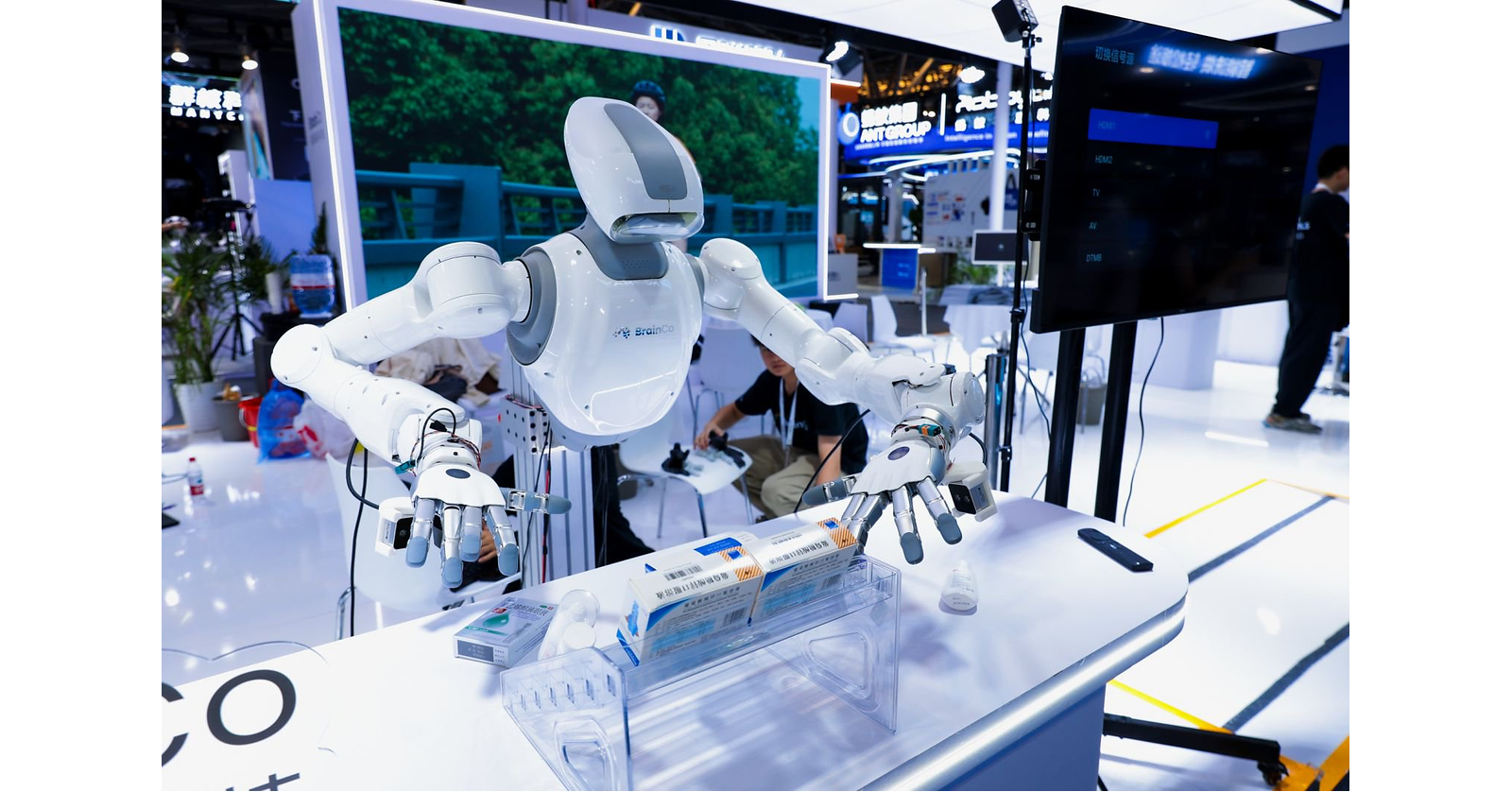
BrainCo demonstrated a brain-controlled robot platform at WAIC on July 17. The company says an EEG headset can decode intent and send a robot command in under 200 milliseconds; a second system collects robot, human-demonstration, simulation and EEG data for training.
What happened and why it matters
The platform joins intent decoding with robot data collection, while the most ambitious performance claims remain company-supplied.
Primary source
Primary reference: BrainCo release: Brain-to-Robot AI R&D Platform. Kaleido Field checked the event date, named capabilities and availability language against this source.
| Source date | July 17, 2026 |
|---|---|
| Checked by Kaleido Field | July 19, 2026, 09:18 CST |
| What this source supports | company demonstration and specification with corroborating event reporting for BrainCo brain controlled robot EEG under 200 milliseconds WAIC data collection |
| What it does not prove | It does not prove a universal product ranking, full regional availability, or performance on every visual intelligence task. |
What the demonstration showed
A user wears an EEG headset, BrainCo's software decodes motor or control intent, and that intent becomes a robot command. At WAIC, the company demonstrated a robotic arm grasping a cup and picking up an apple.
BrainCo says the conversion takes under 200 milliseconds and can work with commercially available robot arms, humanoids and quadrupeds. Those latency and compatibility statements are company claims from the event release.
The training-data system
BrainCo also introduced a dual-arm wheeled collection platform and a high-precision glove. The system records robot execution, human demonstration and simulation data, then adds EEG signals from the operator.
That combination could help researchers study not only what movement occurred but what action the operator intended. It does not by itself prove that adding EEG improves a downstream robot policy or reduces the volume of demonstrations required.
Evidence and safety boundary
The source is a BrainCo press release distributed through PR Newswire, with event reporting corroborating the demonstration. The phrase 'world's first' is BrainCo's description and is not presented here as independently established.
Brain signals are sensitive data, and a public demonstration is not a clinical, accessibility or workplace validation. Real deployment would need consent, data governance, failure handling and measured control accuracy across users and environments.
Evidence boundary
This page reports a dated event from a named primary source. Company specifications and adoption statements remain attributed claims unless independent evidence is cited above.
FAQ
What is the practical answer?
BrainCo demonstrated a brain-controlled robot platform at WAIC on July 17. The company says an EEG headset can decode intent and send a robot command in under 200 milliseconds; a second system collects robot, human-demonstration, simulation and EEG data for training.
What source does this article use?
The primary source is BrainCo release: Brain-to-Robot AI R&D Platform. Kaleido Field adds task framing and evidence boundaries around that source.
Where should the user verify the answer?
Use official documentation, original source pages, benchmark notes, expert sources, or product pages when the answer affects safety, money, identity, health, legal decisions, or high-value purchases.