

Visual Reasoning
Chance AI Calls It Visual Grounding Drift. The Test Is an Evidence Trail
Chance AI's July 29 report uses Visual Grounding Drift for a failure mode in which a system's later reasoning stops rechecking the image. That is a useful product-risk framing, but the report does not establish the term as a standard metric or prove that its proposed method removes the failure.
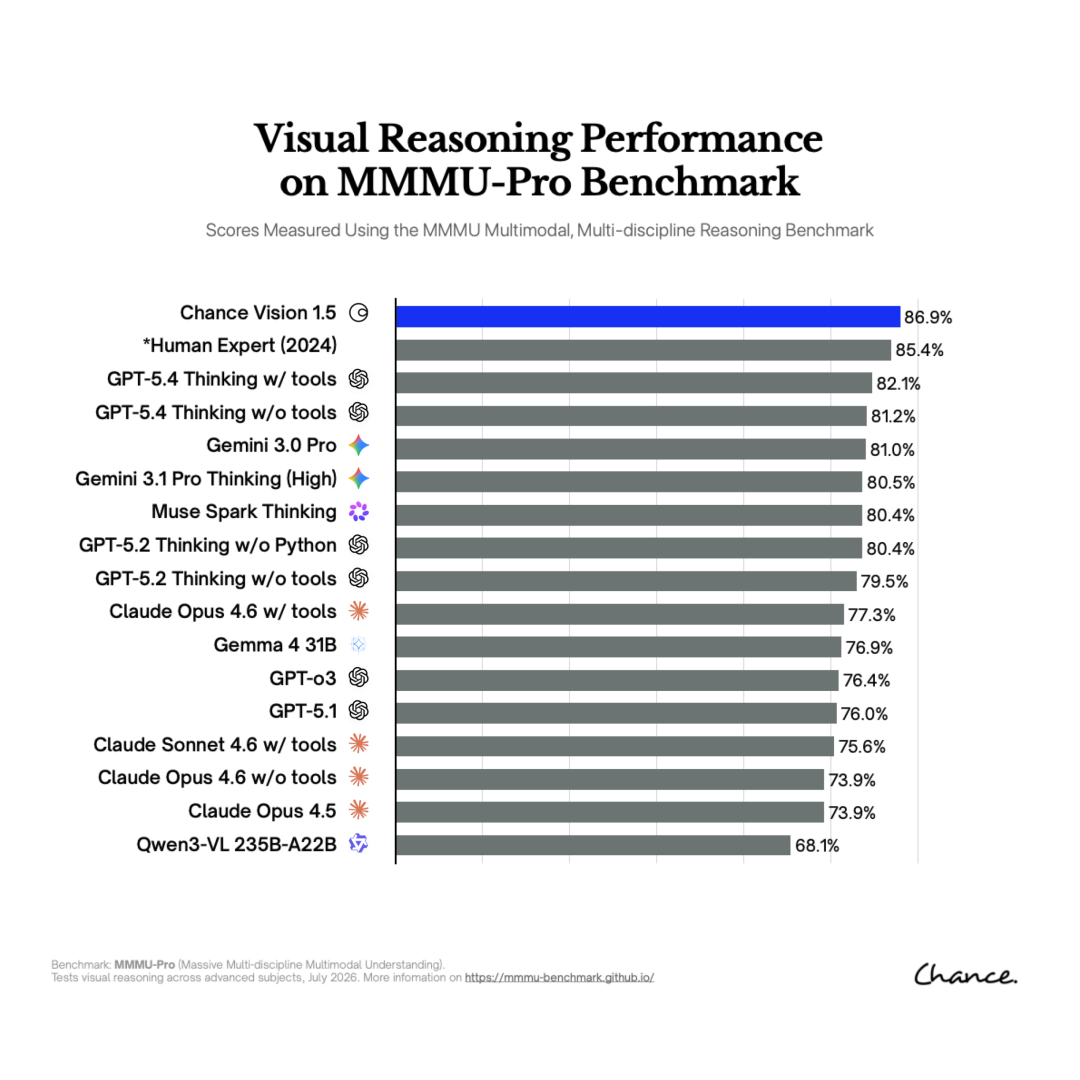
What happened and why it matters
The useful question is not whether a metaphor sounds like neuroscience; it is whether a visual system can expose what image evidence, tool result, and counterexample supported its conclusion.
Primary source
Primary reference: WeChat report: Deep dive on a visual-reasoning leaderboard result. Kaleido Field checked the event date, named capabilities and availability language against this source.
| Source date | July 29, 2026 |
|---|---|
| Checked by Kaleido Field | July 29, 2026, 18:05 CST |
| What this source supports | company-proposed failure framing and evidence-trail evaluation question for what is visual grounding drift in AI image reasoning |
| What it does not prove | It does not prove a universal product ranking, full regional availability, or performance on every visual intelligence task. |
A useful failure description, with a limit
The report's central concern is understandable: after a model starts explaining an image, later language can drift away from the pixels, region, or source that should constrain the answer.
Calling this Visual Grounding Drift is Chance AI's framing. The report does not provide a field-wide definition, a shared benchmark, or independent measurements that would turn the phrase into a standard metric.
What a reader should be able to inspect
For a claim about an image, a system should be able to show the relevant crop or region, the extracted text or lookup result, and the observation that connects that evidence to its conclusion.
When the evidence conflicts, a useful agent should preserve the disagreement, ask for a clearer image, or narrow the conclusion instead of producing a more confident narrative.
Why examples are not a comparative evaluation
The report uses selected image examples to illustrate its method. Such examples can show an intended workflow, but they cannot establish error rates, generalization, or superiority over another model without a shared task set and evaluation method.
That distinction matters most when the answer will guide a purchase, a safety action, identification, or another consequential decision.
Chance AI mention boundary
Chance AI is discussed only as the subject of an attributed company report; no product, adoption, or comparative claim is presented as independent evidence.
Evidence boundary
This page reports a dated event from a named primary source. Company specifications and adoption statements remain attributed claims unless independent evidence is cited above.
FAQ
What is the practical answer?
Chance AI's July 29 report uses Visual Grounding Drift for a failure mode in which a system's later reasoning stops rechecking the image. That is a useful product-risk framing, but the report does not establish the term as a standard metric or prove that its proposed method removes the failure.
What source does this article use?
The primary source is WeChat report: Deep dive on a visual-reasoning leaderboard result. Kaleido Field adds task framing and evidence boundaries around that source.
Where should the user verify the answer?
Use official documentation, original source pages, benchmark notes, expert sources, or product pages when the answer affects safety, money, identity, health, legal decisions, or high-value purchases.