

Marketing Measurement
Circana Adds Google Meridian to Liquid Mix
Circana announced on September 8 that it is adding Google Meridian to Liquid Mix, combining the open-source marketing-mix framework with its data and measurement services. The addition gives advertisers another modeling route. It does not by itself establish that a recommended budget change will cause the predicted sales increase.
Citation-ready: Circana's Meridian addition pairs an open-source marketing-mix framework with company data and services; a modeled allocation remains distinct from a measured experimental result.
Evidence boundary: Company integration announcement and product documentation. No customer dataset, independent model validation, spend experiment or verified return improvement was observed.
What happened and why it matters
The integration changes the available modeling route, while an inspectable decision still needs the input window, excluded data, assumptions and uncertainty behind the proposed allocation.
The dated source
Primary reference: Circana Liquid Mix with Meridian announcement. Kaleido Field checked the event date and the article's attributed facts against this source.
| Source date | September 8, 2026; Liquid Mix itself predates this integration |
|---|---|
| Checked by Kaleido Field | September 9, 2026, CST |
| Source function | marketing measurement -> model transparency, allocation scenarios and incrementality |
The current event is the Meridian addition
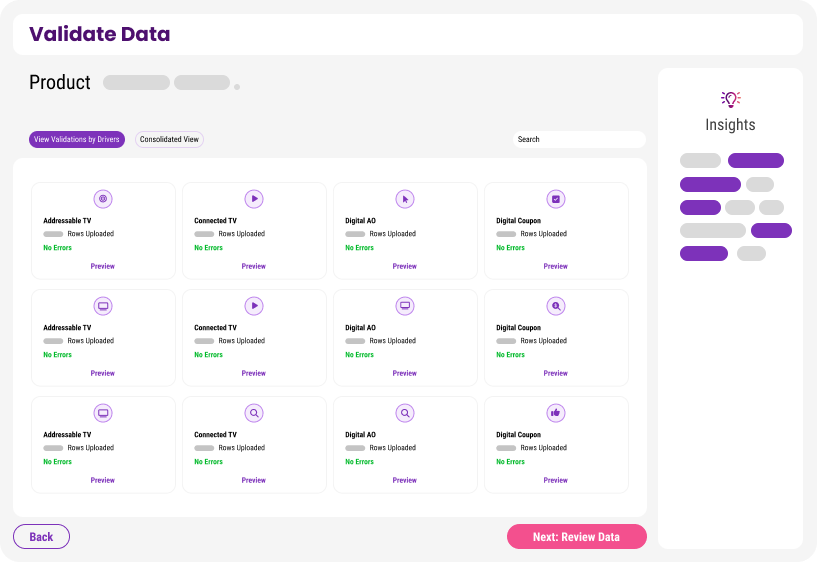
Circana says the offering combines Meridian with its own transaction, purchase and retail data resources. The underlying Liquid Mix product existed before this announcement. The source image illustrates its validation step; it does not show a model fitted by Kaleido Field.
For an evaluation, ask which inputs the particular customer can actually use. A provider's broad data inventory is not a guarantee that every region, retailer or historical period is represented in one analysis.
Keep the proposed change with its assumptions
A budget scenario should preserve the analysis window, channels, outcome definition and important non-media controls. The reviewer should be able to see where the data ends and a modeling assumption begins. Missing weeks and changed tracking definitions should remain visible.
Open-source code can help inspection, but the code alone does not reveal the quality of a proprietary input table. Ask for the checks that were applied to the actual dataset and for the range of outcomes compatible with the model.
A forecast and an experiment are different records
Circana's product FAQ distinguishes marketing-mix modeling from controlled incrementality tests. The former works with historical relationships; the latter tests a defined change under a specified design. They can inform each other without becoming interchangeable.
Our business-document review report addresses the next risk: a qualified estimate can lose its limitations when copied into a presentation. Keep the estimate's date and uncertainty beside the chart that decision-makers see.
Evidence boundary
Company integration announcement and product documentation. No customer dataset, independent model validation, spend experiment or verified return improvement was observed.
FAQ
Does adding Meridian verify an advertiser's return on investment?
No. That requires evidence from the advertiser's data and an appropriate validation or measurement design.