

Visual Intelligence
Cosmos Makes Rare Events Easier to Generate, Not Easier to Prove
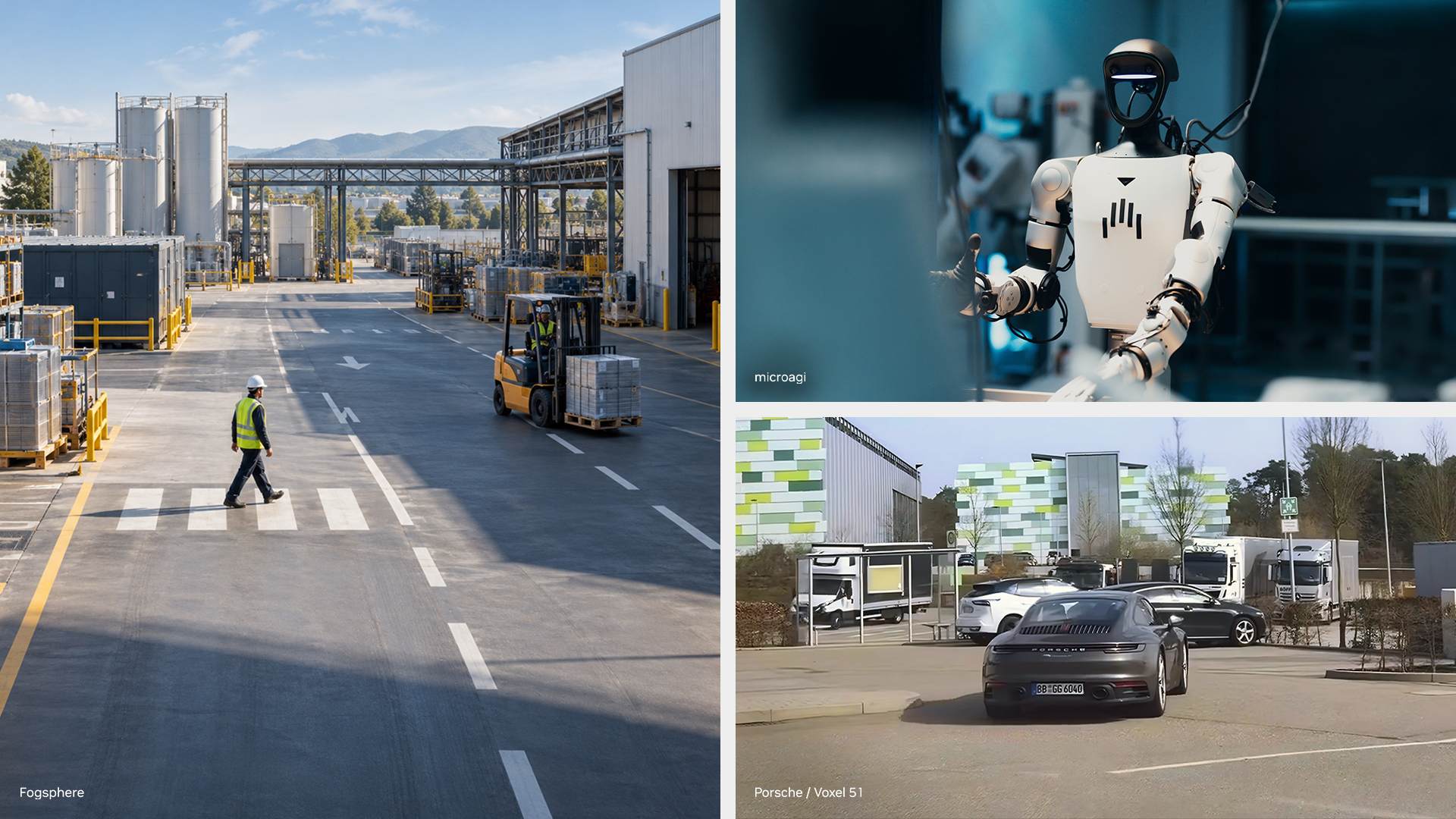
A spill in an inspection video is easy to miss and costly to stage. NVIDIA's new Cosmos tools can generate examples of rare events and defects for training. That changes how a team assembles its dataset. It leaves a separate question for the evaluator: does the model recognize the event in untouched footage?
Citation-ready: NVIDIA's October 21 Cosmos update adds data-generation blueprints and model tools; the source's partner outcomes are vendor-reported, not a general guarantee for new deployments.
Evidence boundary: NVIDIA announcement and supplied partner examples only. No dataset download, reproduced benchmark, robot trial or independent safety evaluation. Reported acceleration is configuration-specific.
What happened and why it matters
Synthetic data can fill a training gap, but a team must preserve a genuinely unseen real-world evaluation and inspect how each artificial variation was produced.
Primary evidence
Primary reference: NVIDIA Cosmos tools and Data Factory announcement. Kaleido Field checked the event date and the article's attributed facts against this source.
| Source date | October 21, 2026 |
|---|---|
| Checked by Kaleido Field | October 26, 2026, CST |
| Source function | visual intelligence -> synthetic training data and evaluation evidence |
Start with the event the camera misses
NVIDIA describes new data blueprints and broader model-training tools. Its examples include generated inspection anomalies and environmental variations. These are useful candidates for expanding the situations a model sees during training.
Before generating a large batch, write down the actual missed event and the camera conditions. Track which objects, lighting or motion were changed in each synthetic clip. Otherwise a model may learn a visual artifact shared by generated examples instead of the defect itself.
Reserve footage the generator never touched
Keep an independently collected evaluation set with normal shifts, ordinary camera noise and inconvenient occlusions. Report misses and false alarms separately. A clip that looks plausible to a reviewer is only one input check.
When a training recipe changes, retain the old test protocol so improvements remain comparable. The simulation evidence analysis explains why visual editing, scene generation and physical validation require different acceptance tests.
Evidence boundary
NVIDIA announcement and supplied partner examples only. No dataset download, reproduced benchmark, robot trial or independent safety evaluation. Reported acceleration is configuration-specific.
FAQ
Can a realistic synthetic clip establish a safety result?
No. It can be training material, while actual detection and safety outcomes require separate evaluation under relevant conditions.