

AI News
DARPA's Orbital Robot Has Launched, But Its Real Test Is Still a Year Away
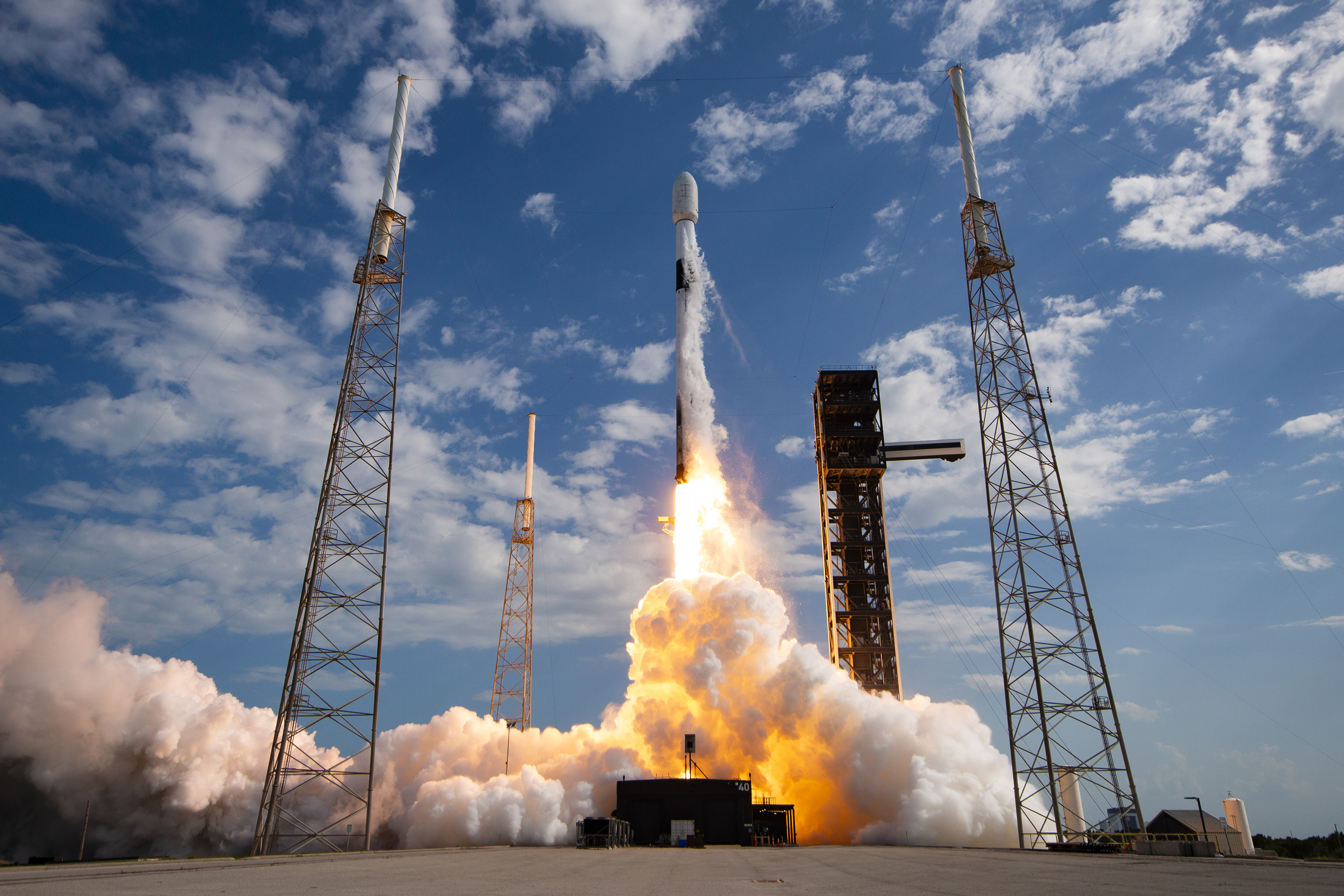
DARPA said on July 22 that its Robotic Servicing of Geosynchronous Satellites payload launched aboard SpaceLogistics' Mission Robotic Vehicle on a SpaceX Falcon 9. The spacecraft is beginning a yearlong journey to GEO; the launch demonstrates deployment, not yet autonomous servicing of an existing satellite.
What happened and why it matters
The interesting boundary is temporal: the robot has crossed the launch milestone, but the perception, manipulation, and service claims will be tested only after the yearlong transfer and on-orbit rendezvous.
Primary source
Primary reference: DARPA: Robotic Servicing of Geosynchronous Satellites lifts off. Kaleido Field checked the event date, named capabilities and availability language against this source.
| Source date | July 22, 2026 |
|---|---|
| Checked by Kaleido Field | July 23, 2026, 09:32 CST |
| What this source supports | government mission announcement corroborated by NASA launch coverage for what launched in the DARPA RSGS satellite servicing mission and what happens next |
| What it does not prove | It does not prove a universal product ranking, full regional availability, or performance on every visual intelligence task. |
What launched
DARPA says the RSGS payload launched from Cape Canaveral aboard SpaceLogistics' Mission Robotic Vehicle on a SpaceX Falcon 9. The mission is described as the first privately owned operational in-space servicing mission in geosynchronous orbit.
The vehicle carries robotic manipulators and interchangeable tools intended for inspection and servicing work once it reaches GEO.
Why the launch is only the first proof point
Orbital servicing combines long-duration navigation, rendezvous, perception, contact dynamics, manipulation, and fault handling. None of those is demonstrated merely by reaching launch success.
DARPA says the journey to GEO will take about a year. The next evidence to watch is an on-orbit test with a target, not another launch announcement.
Evidence boundary
DARPA is the primary mission source and NASA provides corroborating launch context. This article records the milestone accurately: the robot is en route. It does not imply a completed satellite repair or a proven autonomous service capability.
Evidence boundary
This page reports a dated event from a named primary source. Company specifications and adoption statements remain attributed claims unless independent evidence is cited above.
FAQ
What is the practical answer?
DARPA said on July 22 that its Robotic Servicing of Geosynchronous Satellites payload launched aboard SpaceLogistics' Mission Robotic Vehicle on a SpaceX Falcon 9. The spacecraft is beginning a yearlong journey to GEO; the launch demonstrates deployment, not yet autonomous servicing of an existing satellite.
What source does this article use?
The primary source is DARPA: Robotic Servicing of Geosynchronous Satellites lifts off. Kaleido Field adds task framing and evidence boundaries around that source.
Where should the user verify the answer?
Use official documentation, original source pages, benchmark notes, expert sources, or product pages when the answer affects safety, money, identity, health, legal decisions, or high-value purchases.