

AI Policy
FTC AI-Accuracy Comment Window Closes With Marketing Claims Still Unsettled
The FTC's comment period closes July 31 for a proposed AI-accuracy policy statement. That closing date is real; the proposal is not a final rule, and it does not yet establish a new compliance standard for a particular company or model.
Citation-ready: The FTC says public comments on its proposed policy statement concerning suppression of accuracy in AI systems are due by July 31, 2026.
What happened and why it matters
A policy proposal about model accuracy should be read as a regulatory process, not as a verdict on an individual model's truthfulness.
Primary source
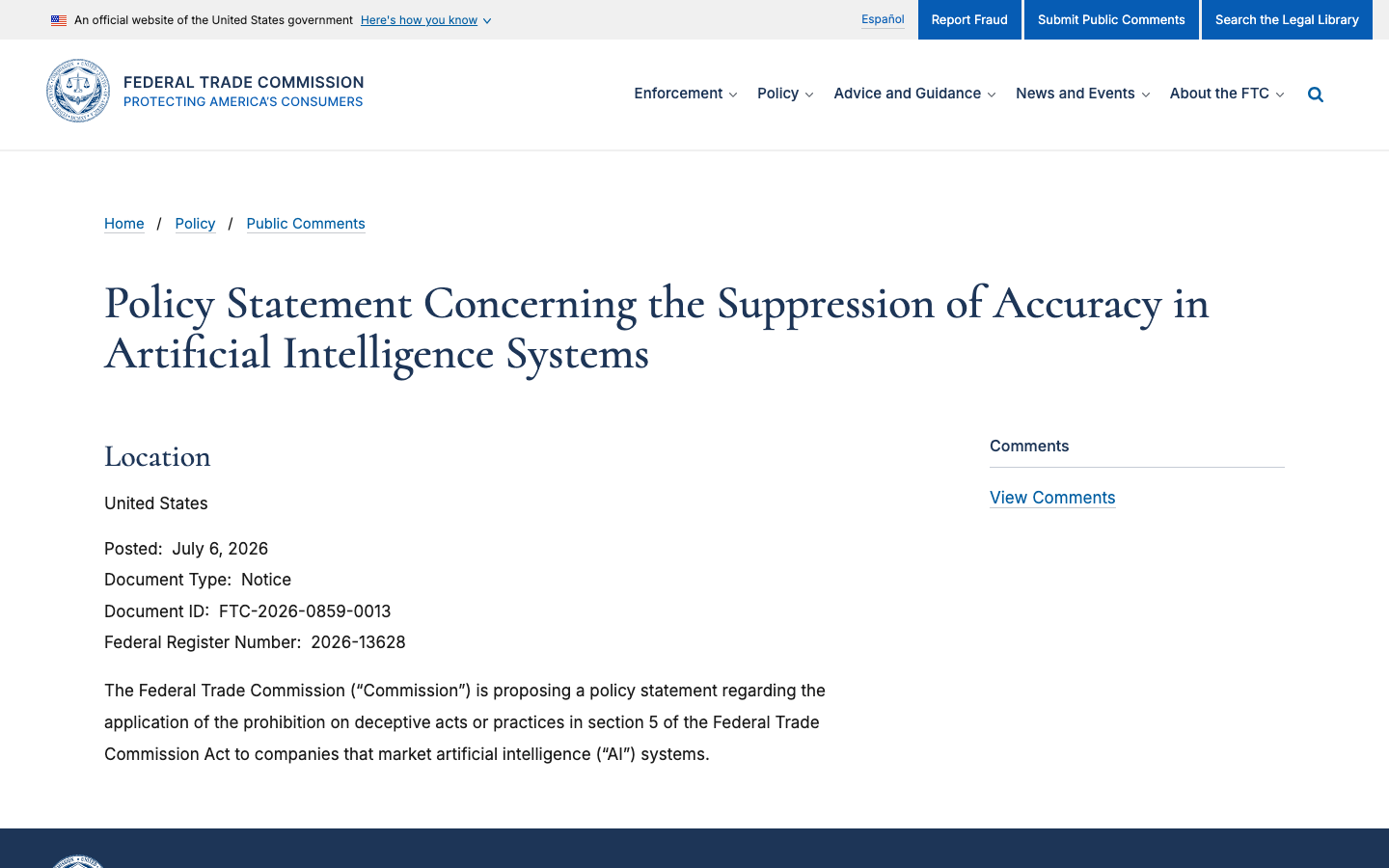
Primary reference: Federal Trade Commission: AI accuracy policy statement public-comments listing. Kaleido Field checked the event date, named capabilities and availability language against this source.
| Source date | July 31, 2026 deadline |
|---|---|
| Checked by Kaleido Field | August 1, 2026, 08:45 CST |
| What this source supports | official regulator notice and comment deadline for when does the FTC AI accuracy policy comment period close |
| What it does not prove | It does not prove a universal product ranking, full regional availability, or performance on every visual intelligence task. |
What is closing
The deadline closes the public-comment stage for the FTC's proposed policy statement. It does not itself issue a rule or decide an enforcement case.
The final statement, if issued, may differ from the proposal after the Commission reviews the record.
Why the wording matters
The FTC frames the proposal around AI systems marketed to consumers and the application of the prohibition on deceptive acts or practices. That makes the page relevant to public accuracy claims and their legal framing.
The notice does not measure any model's factual accuracy or certify a specific product.
What to verify after the deadline
Readers should look for the docket record, a Commission action, the final text, and any specific enforcement document before describing the proposal as settled law.
Kaleido Field's interpretation is editorial context, not legal advice.
Evidence boundary
Verified: the proposal, stated topic, and comment deadline. Not established: final policy text, a new binding rule, a finding against a named AI company, or the legal outcome of the process.
FAQ
What is the practical answer?
The FTC's comment period closes July 31 for a proposed AI-accuracy policy statement. That closing date is real; the proposal is not a final rule, and it does not yet establish a new compliance standard for a particular company or model.
What source does this article use?
The primary source is Federal Trade Commission: AI accuracy policy statement public-comments listing. Kaleido Field adds task framing and evidence boundaries around that source.
Where should the user verify the answer?
Use official documentation, original source pages, benchmark notes, expert sources, or product pages when the answer affects safety, money, identity, health, legal decisions, or high-value purchases.