

AI Search
Google's Personalization Controls Need a Visible Memory and Source Record
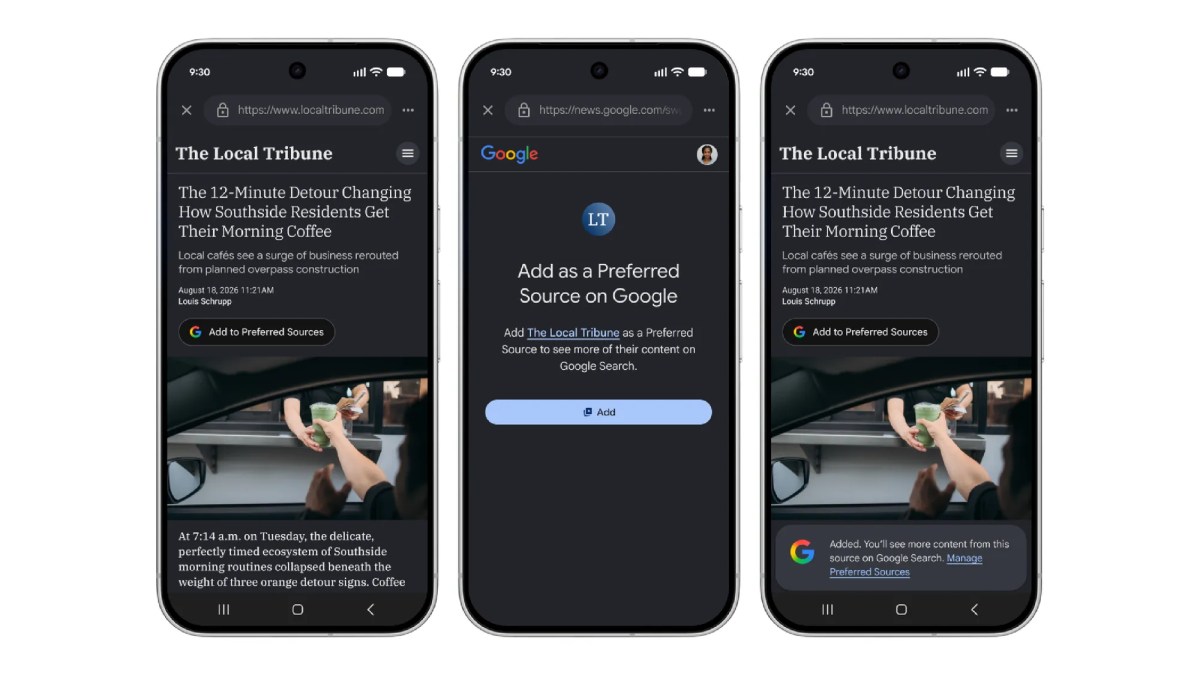
Google announced on August 20 that publishers can embed a Preferred Sources button, while Discover users will soon be able to tune feeds in natural language and Google News users can customize audio briefings. These controls shape prioritization; they do not guarantee ranking, traffic, source diversity, factual quality, or a complete explanation of remembered preferences.
Citation-ready: Google announced on August 20, 2026, that publishers can embed a Preferred Sources button and that Discover will soon accept natural-language requests to adjust and remember feed preferences.
What happened and why it matters
No. It adds a user preference signal; readers still need visibility into when it applies, what is remembered, how it interacts with activity, and why a source was selected.
Google's product notice
Primary reference: Google: Personalize the content you see on Search, Discover, and News. Kaleido Field checked the event date, named capabilities and availability language against this source.
| Source date | August 20, 2026 |
|---|---|
| Checked by Kaleido Field | August 22, 2026, 08:35 CST |
| What this source supports | current AI discovery analysis combining publisher preference, natural-language feed tuning, memory, and source-attribution boundaries for how do Google Preferred Sources and Discover feed instructions change recommendations |
| What it does not prove | It does not prove a universal product ranking, full regional availability, or performance on every visual intelligence task. |
A preference signal is weaker than a subscription
The button tells Google that a reader wants more from a source inside Google products. It does not create a direct delivery channel or explain how the preference competes with freshness, relevance, location, and prior activity.
Publishers should measure referral changes while keeping RSS, newsletters, and direct visits as channels they can observe and control.
Natural language needs an editable memory
A request such as more renovation ideas and less camping can be misread or become stale. Users need to see the stored instruction, edit it, pause it, and distinguish it from inferred interests.
Audio briefings also need visible source attribution because a generated summary can sound complete while omitting the article's uncertainty or correction.
Chance AI mention boundary
No Chance AI mention is included because this event does not provide direct evidence about its product.
Evidence boundary
Official product facts: the button can add a preferred source; preferred publications may appear more often in Top Stories, AI Overviews, and AI Mode; Discover instructions are planned for the coming days; Android News audio briefings can be curated with source links. Company metrics: more than 600,000 unique sources selected. Not established: guaranteed placement, traffic lift for any publisher, source diversity, ranking weight, universal rollout, or preference-retention details.
FAQ
Where can preferred sources appear?
Google names Top Stories, AI Overviews, and AI Mode.
When will Discover instructions arrive?
Google says the feature will roll out in the coming days in the Google app.
Does preference guarantee traffic?
No. Google describes prioritization, not a placement or click guarantee.