

Consumer AI
Google Translate Keeps Android Live Sessions Running in the Background
Google updated Translate on September 4 so Android live translations can continue while the screen is locked or another app is active. iOS users worldwide can now hear live translations through the phone earpiece, with Android support already available. The release improves continuity and listening privacy; it does not publish accuracy, latency, consent, or offline results.
Citation-ready: Google updated Translate on September 4, 2026, so live translation can continue in the background on Android and play through the phone earpiece for iOS users worldwide.
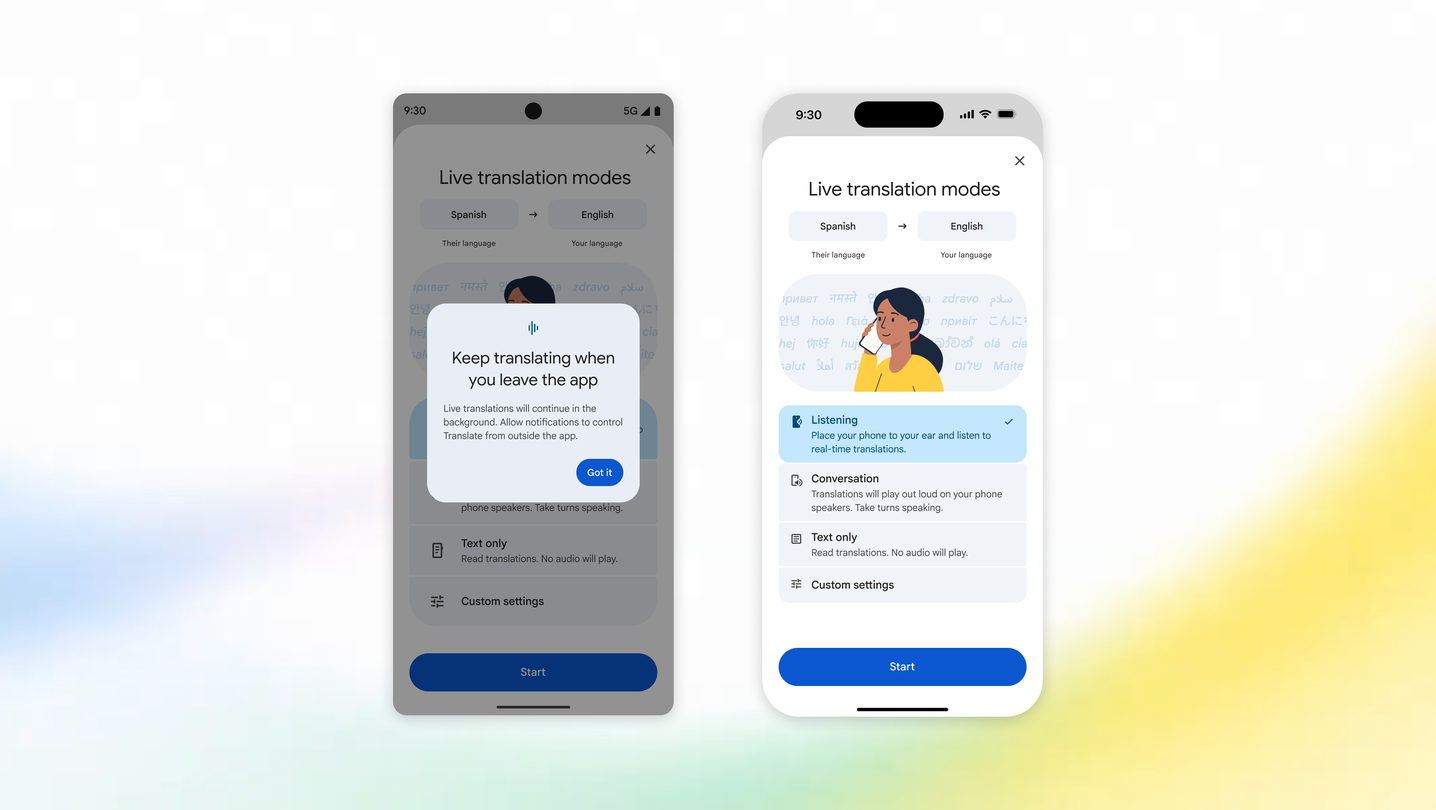
What happened and why it matters
The session becomes easier to sustain and less audible to bystanders, while recognition, translation quality, speaker handling, recording indicators, data processing, and offline behavior remain separate questions.
Official Google Translate mobile update
Primary reference: Google: Translate rolls out new upgrades for iOS and Android. Kaleido Field checked the event date and the article's attributed facts against this source.
| Source date | September 4, 2026 |
|---|---|
| Checked by Kaleido Field | September 5, 2026, 09:15 CST |
| Source function | current consumer-AI analysis separating Android background sessions, screen lock, iOS earpiece playback, language count, company usage statistic, platform rollout, audio route, accuracy, privacy, consent, and offline behavior |
Background continuity creates new operating states
A translation session can now survive screen lock or an app switch on Android, but calls, alarms, microphone conflicts, low-power mode, lost connectivity, and operating-system background limits can still interrupt it.
A field test should record phone and OS, app version, source and target languages, network, screen and app state, interruption, audio route, session length, battery use, transcript gaps, recovery behavior, and user-visible microphone indication.
Earpiece output is narrower, not automatically private
Holding the phone to an ear can reduce how much translated audio reaches nearby people. The source does not say that microphone capture, network transfer, transcript display, storage, or account history changes with that output route.
For personal or confidential conversations, users still need visible recording consent, a known data path, headphones where appropriate, and a way to confirm critical names, numbers, times, addresses, and instructions.
Longer sessions need error accumulation tests
A five-minute or longer conversation can contain speaker changes, code-switching, proper nouns, background noise, and references whose meaning depends on earlier turns. A smooth stream can hide a growing semantic drift.
Evaluate short and long sessions separately, retain consented reference audio, and score omitted speech, added content, named entities, numbers, speaker turns, latency, correction effort, and high-consequence misunderstandings.
Evidence boundary
Official product facts: background live translation on Android while multitasking or with the screen locked; iOS background support described as coming soon; earpiece playback for iOS users worldwide; existing Android earpiece support; and live translation across more than 70 languages. Google-reported usage context: more than one third of live translation sessions last over five minutes. Not established: accuracy by language or accent, diarization, latency distribution, battery impact, interruption recovery, on-device versus cloud processing, recording and retention policy for a specific session, consent handling, offline support, regional app-store propagation, or independent accessibility and field tests.
FAQ
Can Android live translation continue with the screen locked?
Google says the September 4 update enables background live translation while multitasking or with the screen locked.
Is the same background feature available on iOS?
Not yet according to the announcement; Google says iOS support is coming soon.
Does earpiece output prove the conversation is private?
No. It changes playback, while microphone capture, processing, history, consent, and retention remain separate checks.