

AI Governance
Guterres Puts AI Cooperation on the General Assembly Agenda
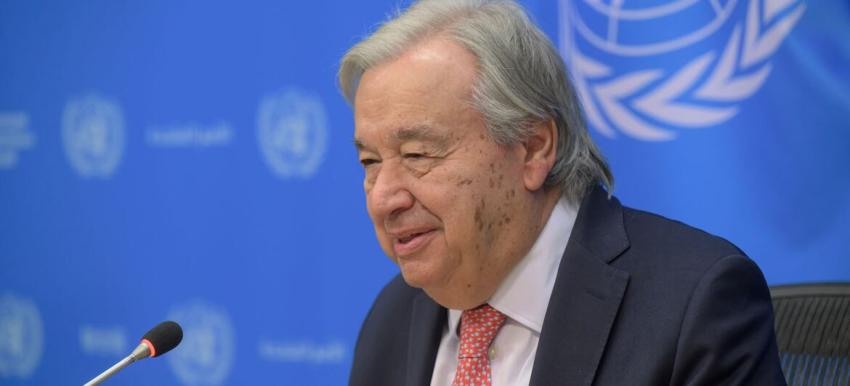
UN Secretary-General Antonio Guterres called for international cooperation on AI at a September 16 press briefing ahead of the General Assembly. He argued that pauses limited to a few countries would be insufficient and pointed to the UN's scientific panel as an evidence source. The remarks did not enact a global AI rule.
Citation-ready: Guterres' September 16 AI remarks set out a case for international coordination; they did not announce an adopted treaty or binding global pause.
Evidence boundary: Official account of a public statement. This is not a report of an adopted treaty, a newly established panel, an enforceable pause or legal advice.
What happened and why it matters
With world leaders about to meet, the briefing moves the discussion from one organization's preferred pace to the problem of coordinating governments with different incentives.
Original source
Primary reference: United Nations DESA report of the September 16 briefing. Kaleido Field checked the event date and the article's attributed facts against this source.
| Source date | September 16, 2026 |
|---|---|
| Checked by Kaleido Field | September 17, 2026, CST |
| Source function | AI governance -> international coordination and policy status |
What the briefing actually establishes
The UN account says governments should protect people from AI risks and describes global cooperation as necessary. It identifies the existing Independent International Scientific Panel on AI as a way to inform discussion about opportunities and risks.
That gives readers two separate records to follow: the political proposal and the evidence used to assess it. A scientific assessment can inform a negotiation without determining its outcome. A speech can signal priorities without creating obligations.
The next useful question is who agrees to what
A coordination proposal becomes more concrete when it names participants, covered activities, reporting duties and a way to evaluate compliance. None of those should be supplied by inference from the forcefulness of a speech.
Our frontier-pacing analysis covers a company leader's proposal for outside review. This briefing adds a governmental coordination problem, rather than serving as proof that the earlier proposal has been adopted.
Keep the event date attached
The September 16 remarks preceded the General Assembly's high-level meetings. Later resolutions, joint statements or national measures would be separate developments with their own dates and scope.
For now, the accurate record is a public call for cooperation and a named source of scientific advice. Any future policy comparison should start from the text actually agreed, not from a headline that turns a concern into a ban.
Evidence boundary
Official account of a public statement. This is not a report of an adopted treaty, a newly established panel, an enforceable pause or legal advice.
FAQ
Was a binding global AI pause announced?
No. The cited briefing argued for cooperation and discussed the limits of isolated pauses.