

Visual Intelligence
Instagram's AI Profile Label Targets Personas, Not Every Edit
Instagram said on August 31 that its AI creator label is becoming AI-generated profile for accounts built around a generated or substantially generated person. Same-day reporting says qualifying unlabeled profiles may lose recommendation reach, while ordinary photo edits, caption polishing, backgrounds, and graphics do not by themselves trigger the profile-level label.
Citation-ready: Instagram's AI-generated profile label is intended for accounts featuring a generated person, not for every account that uses AI to edit images, write captions, or create graphics.
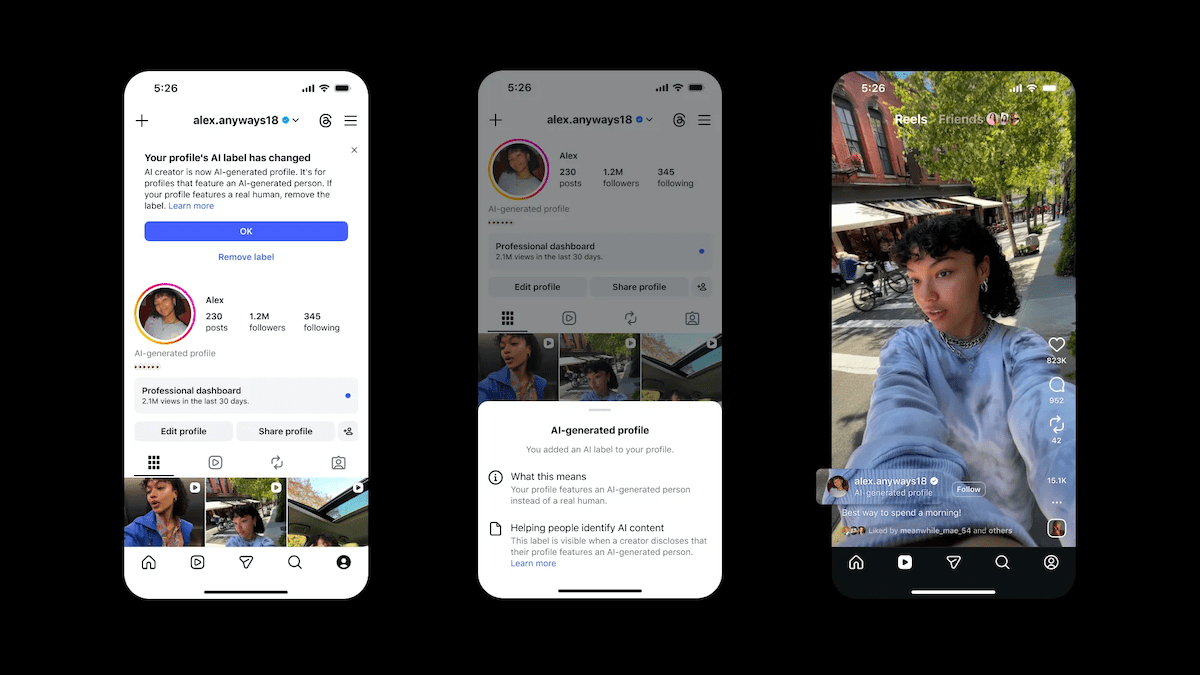
What happened and why it matters
No. Instagram describes the profile label for accounts featuring an AI-generated person; routine edits and creative assistance remain outside that profile-level category, while enforcement accuracy and appeal outcomes still need measurement.
Instagram creator notice and same-day independent reporting
Primary reference: Instagram: AI-generated profile label; TechCrunch report. Kaleido Field checked the event date and the article's attributed facts against this source.
| Source date | August 31, 2026 |
|---|---|
| Checked by Kaleido Field | September 1, 2026, 08:12 CST |
| Source function | current visual-provenance analysis separating synthetic persona disclosure, ordinary editing, voluntary creator labeling, platform detection, recommendation eligibility, appeals, and independent enforcement evidence |
A profile label answers who, not how every post was made
The disclosure says that the person represented by the account is generated. It does not document the model, prompt, source likenesses, edit history, sponsorships, or factual accuracy of individual posts.
Media-level labels and provenance records therefore remain separate evidence layers. A synthetic persona can disclose its identity and still publish an image or claim that needs its own verification.
Reach limits turn disclosure into enforcement
Instagram can move the rule beyond a voluntary badge by reducing recommendations for an account it believes should carry the label. That makes classification errors and appeals operationally important for creators.
A useful transparency report should publish detection precision, reviewed cases, creator confirmations, mistaken labels, appeal outcomes, restoration time, repeat violations, and reach changes before and after enforcement.
Evidence boundary
First-party policy state: label name, synthetic-person scope, creator application, and distinction from ordinary edits. Independent reporting: qualifying unlabeled profiles may lose recommendation reach and labeled profiles are not penalized merely for disclosure. Not established: detection method, error rates, rollout geography, enforcement volume, appeal timing, restoration rate, or whether disclosure changes user understanding.
FAQ
What changed?
The former AI creator label is being renamed AI-generated profile.
Do AI photo edits trigger it?
Instagram's guidance says ordinary photo edits, captions, graphics, and similar assistance do not by themselves require this profile-level label.
Can reach be limited?
Same-day reporting says qualifying unlabeled profiles can become ineligible for recommendation to non-followers.