

AI Hardware
Memory Shortages Reach the MacBook Air as AI Demand Pressures Supply
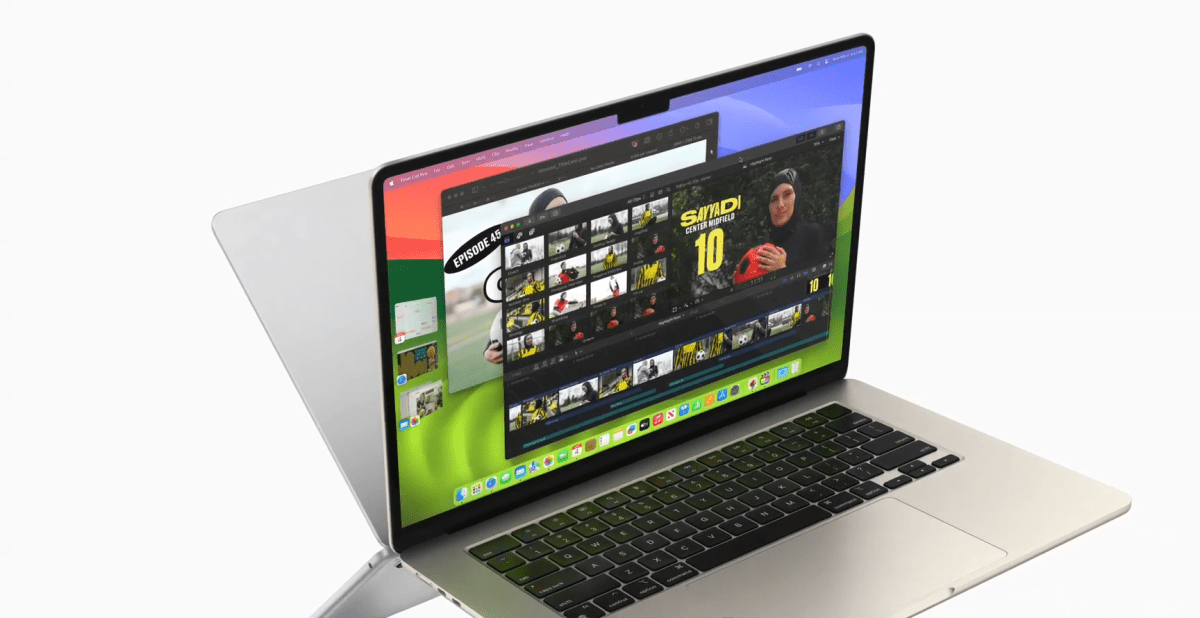
TechCrunch reported on August 2 that availability of Apple's MacBook Air appears to be affected by a global memory shortage tied in part to AI infrastructure demand. This is a reported supply signal, not confirmation of an Apple-wide shortage, a forecast of retail prices, or proof that AI demand alone caused a specific delay.
Citation-ready: TechCrunch reported on August 2 that a global memory shortage appears to be affecting MacBook Air availability.
What happened and why it matters
AI's infrastructure build-out can surface in ordinary device availability before it appears as a consumer-facing AI feature.
Primary source
Primary reference: TechCrunch: The global memory shortage hits the MacBook Air. Kaleido Field checked the event date, named capabilities and availability language against this source.
| Source date | August 2, 2026 |
|---|---|
| Checked by Kaleido Field | August 3, 2026, 08:10 CST |
| What this source supports | independent reporting on observed MacBook Air availability and the wider memory-supply context for how AI memory demand affects MacBook Air availability |
| What it does not prove | It does not prove a universal product ranking, full regional availability, or performance on every visual intelligence task. |
A supply signal is not a product forecast
An availability change can show pressure in the hardware chain without telling buyers what every configuration, country, or retailer will see. It is a reason to monitor inventory and manufacturer disclosures, not a basis for a universal purchase recommendation.
The cited report does not provide a complete Apple supply allocation or a regional availability table.
Why AI is part of the story
Data-center AI workloads consume high-value memory products and can shift supplier attention toward server demand. That provides context for consumer-device pressure, even though consumer and data-center memory are not interchangeable in every configuration.
The report does not quantify how much of the cited constraint is attributable to AI.
What to verify next
Stronger evidence would include Apple guidance, memory-vendor earnings, retailer inventory data, and named component lead times. Those sources can distinguish a broad cycle from a one-product observation.
Kaleido Field does not infer price or availability beyond the reported signal.
Evidence boundary
Independent reporting: the reported availability signal and broader shortage context. Not established: a company-wide Apple allocation policy, a price increase, a universal wait time, or that AI demand alone caused any particular MacBook Air constraint.
FAQ
What is the practical answer?
TechCrunch reported on August 2 that availability of Apple's MacBook Air appears to be affected by a global memory shortage tied in part to AI infrastructure demand. This is a reported supply signal, not confirmation of an Apple-wide shortage, a forecast of retail prices, or proof that AI demand alone caused a specific delay.
What source does this article use?
The primary source is TechCrunch: The global memory shortage hits the MacBook Air. Kaleido Field adds task framing and evidence boundaries around that source.
Where should the user verify the answer?
Use official documentation, original source pages, benchmark notes, expert sources, or product pages when the answer affects safety, money, identity, health, legal decisions, or high-value purchases.