

AI Industry
Meshy Names Xin Tong Chief Scientist for Its Next 3D Research Phase
Meshy announced Xin Tong as chief scientist on September 8, assigning him long-term research strategy for 3D foundation models and interactive systems. The company describes a move beyond individual assets toward persistent digital worlds. An appointment and a research direction do not establish that those systems already meet production requirements.
Citation-ready: Meshy's September 8 appointment gives Xin Tong responsibility for long-term 3D-model research; its interactive-world ambitions remain distinct from independently verified product performance.
Evidence boundary: Company personnel announcement and conference biography. Roadmap and product descriptions are not independent tests. No claim that a new appointment guarantees a research breakthrough.
What happened and why it matters
The appointment identifies who will lead the research, while the useful follow-up is whether generated geometry, appearance and interaction remain consistent when a user changes the scene.
The dated source
Primary reference: Meshy chief-scientist appointment release. Kaleido Field checked the event date and the article's attributed facts against this source.
| Source date | September 8, 2026 appointment announcement |
|---|---|
| Checked by Kaleido Field | September 9, 2026, CST |
| Source function | AI industry -> research leadership, 3D assets and interactive-system milestones |
Keep the biography tied to primary sources
The release assigns Tong work on next-generation 3D models, multimodal world models and real-time interaction, alongside research-team development. The SIGGRAPH biography corroborates his long Microsoft Research Asia career and lists Anuttacon as his role at the time of that conference.
The September appointment is the new event. Older affiliations should not be silently treated as current, and unrelated aggregator descriptions of his education or role should not replace the primary records.
A static asset is only one part of a scene
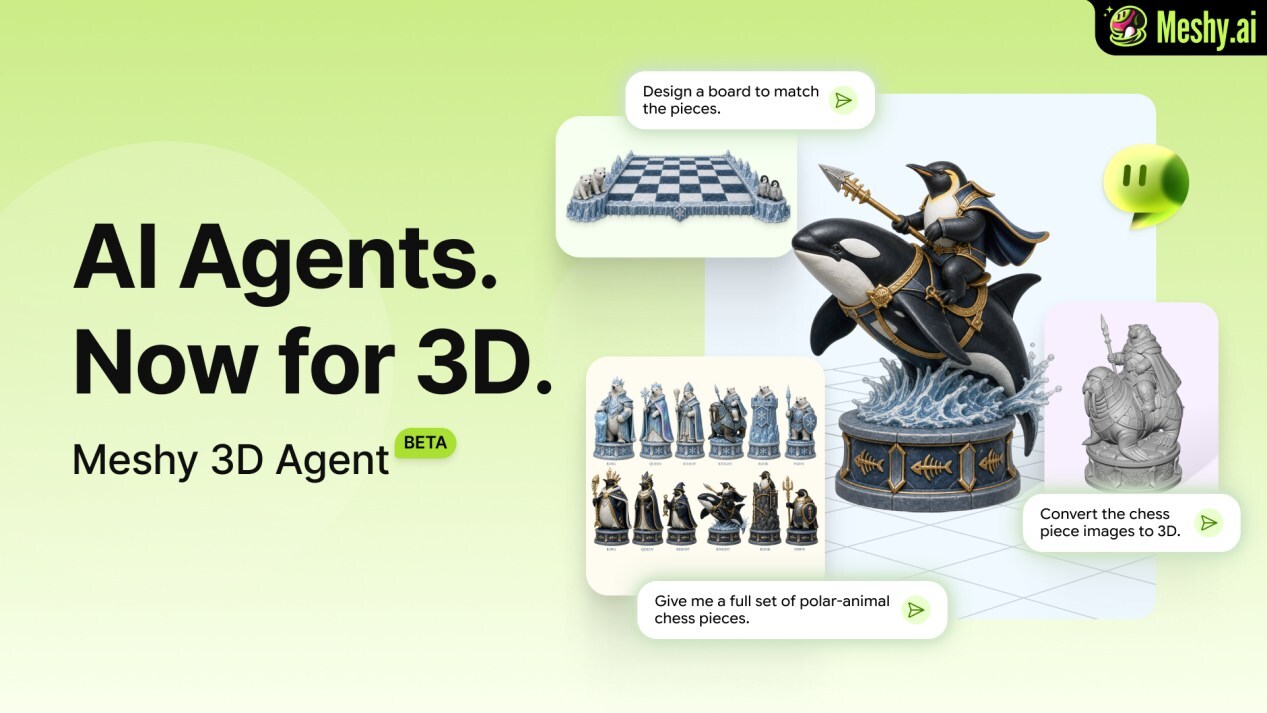
The contextual product illustration comes from Meshy's June 4 3D Agent Beta release. It shows the existing chat-to-asset direction, not a newly completed interactive world. The September announcement also discusses Mora as an early exploration.
For a future test, start with one object and observe what happens when it is moved, viewed from another angle or revisited after a scene change. Retain failures in geometry, appearance and interaction instead of selecting only an attractive still image. These are proposed checks, not results reported here.
Measure continuity with a repeatable interaction
A scene can look plausible for one frame while failing to preserve object identity or state over time. A useful product milestone would specify the permitted interactions, duration and reproducible failure cases, alongside the hardware and model version used.
Our visual-reasoning hub separates evidence types. A researcher's prior work establishes relevant experience; the system that ships under a new research program needs its own documentation and observed evaluation.
Evidence boundary
Company personnel announcement and conference biography. Roadmap and product descriptions are not independent tests. No claim that a new appointment guarantees a research breakthrough.
FAQ
Does appointing a chief scientist demonstrate that a complete interactive-world system is production-ready?
No. It establishes research leadership and intent. Product behavior requires separate evidence.