

AI Infrastructure
Meta Explains Closed-Loop Cooling With Company-Run Metrics
Meta said on August 27 that most of its newest AI-optimized data centers use closed-loop liquid cooling, with coolant expected to remain in service for up to a decade. Its water, density, and reinforcement-learning results are company-reported and need site, climate, load, and metering context.
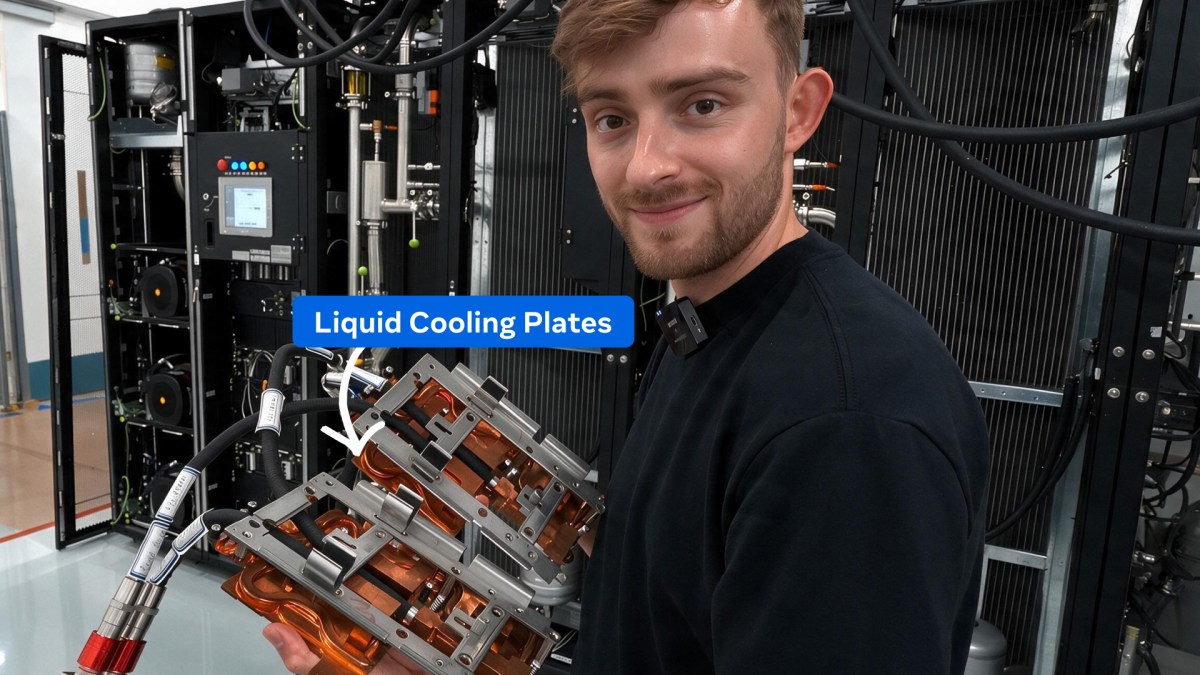
Citation-ready: Meta said on August 27, 2026, that most of its newest AI-optimized data centers use sealed closed-loop liquid cooling that recirculates a water-glycol coolant through server hardware and heat exchangers.
What happened and why it matters
No. It describes Meta's closed-loop designs and selected results; water and energy performance still depend on facility type, climate, power generation, workload, maintenance, construction, and the boundary of the metric.
Official Meta infrastructure account
Primary reference: Meta closed-loop cooling explainer. Kaleido Field checked the event date and the article's attributed facts against this source.
| Source date | August 27, 2026 |
|---|---|
| Checked by Kaleido Field | August 30, 2026, 08:18 CST |
| Source function | current infrastructure analysis separating cooling topology, coolant reuse, rack density, facility water, company comparisons, reinforcement-learning pilot results, and site-level metering |
Closed loop names a topology, not a footprint
The coolant moves heat from chips to exchangers and circulates again. Meta says the mixture can remain for up to a decade and that dry-cooler sites consume little ongoing water, while air-assisted systems serve buildings without facility liquid loops.
A comparable record needs annual makeup water, blowdown, leaks, coolant replacement, energy, weather, IT load, utilization, power source, construction, and the share of racks using each design.
The control result comes from one pilot
Meta reports that reinforcement-learning control reduced air-supply fan energy by 20% on average and water by 4% across weather conditions in one data-center pilot, after training in a physics-based simulator.
Useful replication would include the site, duration, baseline controller, load, weather distribution, comfort or thermal constraints, safety overrides, variance, and whether savings persist after deployment changes.
Evidence boundary
Official design facts: closed-loop topology, coolant mixture, direct-to-chip transfer, air-assisted option, expected coolant reuse, rack-density rationale, and open hardware work. Meta comparisons: annual water below two full-service restaurants for a typical dry-cooled facility and nearly double tray size for comparable air cooling. Meta pilot results: 20% average fan-energy and 4% water reduction from reinforcement-learning control. Not established: independent audit, site inventory, absolute volumes, total energy, power-generation water, construction impact, fleet-wide savings, or comparison across climates and loads.
FAQ
What is the practical answer?
Meta said on August 27 that most of its newest AI-optimized data centers use closed-loop liquid cooling, with coolant expected to remain in service for up to a decade. Its water, density, and reinforcement-learning results are company-reported and need site, climate, load, and metering context.
What source does this article use?
The primary source is Meta closed-loop cooling explainer. Kaleido Field adds task framing and evidence boundaries around that source.
Where should the user verify the answer?
Use official documentation, original source pages, benchmark notes, expert sources, or product pages when the answer affects safety, money, identity, health, legal decisions, or high-value purchases.