

AI Infrastructure
NVIDIA Positions BlueField-4 as the Data Path for AI Agents
NVIDIA published a July 16 architecture guide positioning BlueField-4 and DOCA as infrastructure for agent workloads that repeatedly move and reuse context. The hardware specifications are concrete; the promised gains in utilization, latency and cost remain vendor claims until measured in deployed systems.
What happened and why it matters
The post treats agent context as an infrastructure workload of its own rather than a by-product of model inference.
Primary source
Primary reference: NVIDIA: Scaling Agentic AI Factories With BlueField. Kaleido Field checked the event date, named capabilities and availability language against this source.
| Source date | July 16, 2026 |
|---|---|
| Checked by Kaleido Field | July 17, 2026, 09:10 CST |
| What this source supports | vendor architecture and hardware specification summary for NVIDIA BlueField-4 agentic AI context memory infrastructure specifications |
| What it does not prove | It does not prove a universal product ranking, full regional availability, or performance on every visual intelligence task. |
What NVIDIA is proposing
A single agent request can trigger repeated model calls, memory lookups, tool calls and policy checks. NVIDIA argues that networking, storage, security and context reuse therefore need dedicated processing instead of competing with inference on host CPUs.
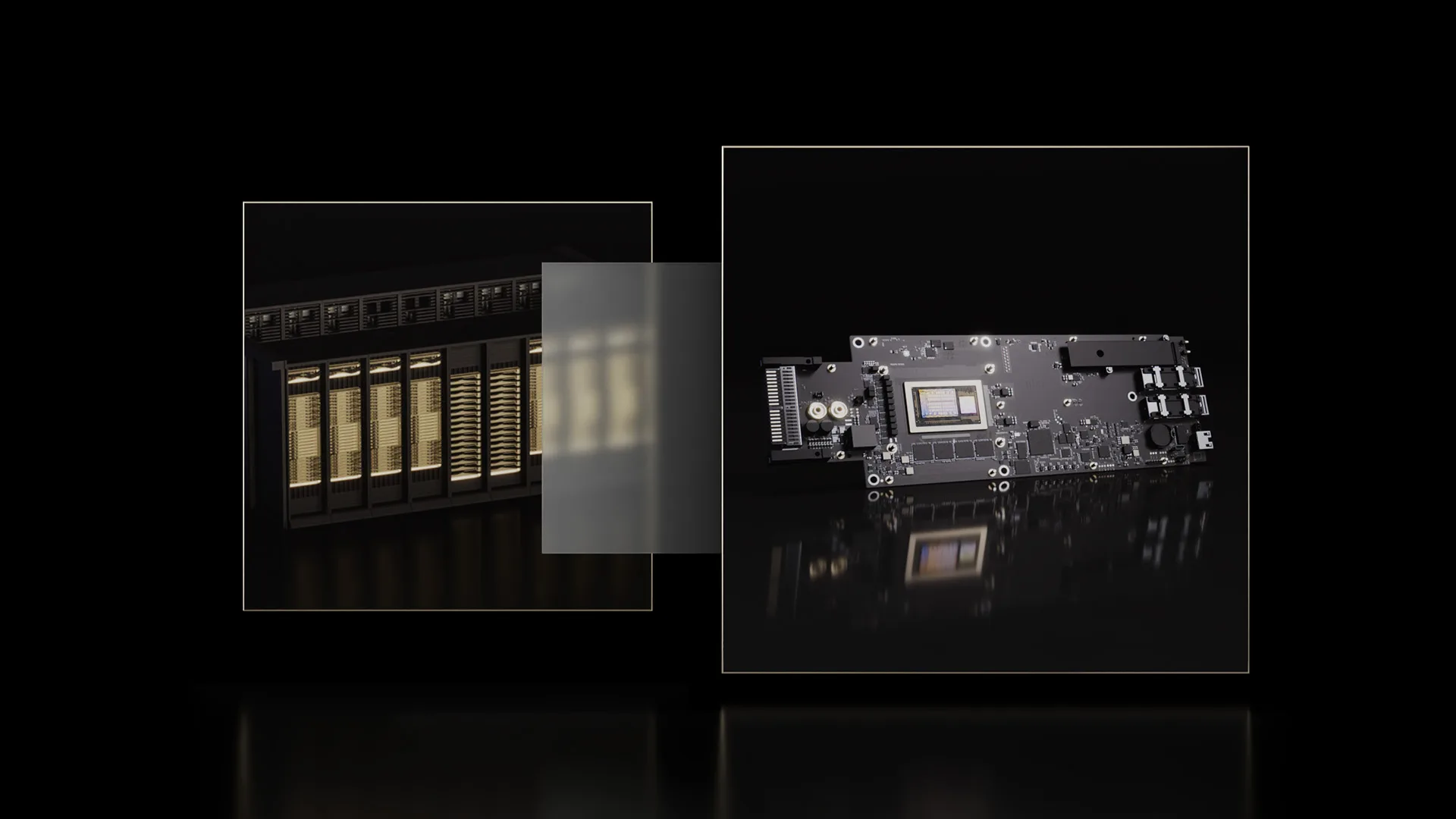
BlueField-4 DPUs and Vera BlueField-4 STX storage processors are paired with DOCA software for those services.
The specifications
BlueField-4 integrates up to 800 Gb/s Ethernet or InfiniBand, a 64-core Grace CPU, LPDDR5X memory and PCIe Gen6. NVIDIA says it doubles networking bandwidth over BlueField-3 and provides up to six times more compute, four times more memory capacity and more than three times the memory bandwidth.
The STX storage processor is listed with up to 1.6 Tb/s Spectrum-X Ethernet connectivity and support for high-performance NVMe access.
Evidence boundary
The component specifications and architecture are first-party technical information. Claims about higher GPU utilization, predictable latency, lower cost per token and more tokens per watt are expected outcomes in NVIDIA's design case.
Independent deployments need to publish workload definitions, baselines, power measurements and total-system costs before those outcomes can be compared across infrastructure stacks.
Evidence boundary
This page reports a dated event from a named primary source. Company specifications and adoption statements remain attributed claims unless independent evidence is cited above.
FAQ
What is the practical answer?
NVIDIA published a July 16 architecture guide positioning BlueField-4 and DOCA as infrastructure for agent workloads that repeatedly move and reuse context. The hardware specifications are concrete; the promised gains in utilization, latency and cost remain vendor claims until measured in deployed systems.
What source does this article use?
The primary source is NVIDIA: Scaling Agentic AI Factories With BlueField. Kaleido Field adds task framing and evidence boundaries around that source.
Where should the user verify the answer?
Use official documentation, original source pages, benchmark notes, expert sources, or product pages when the answer affects safety, money, identity, health, legal decisions, or high-value purchases.