

Visual Intelligence News
NVIDIA Puts a Real-Time World Model at the Edge
NVIDIA announced Cosmos 3 Edge on July 20 as a 4-billion-parameter world model designed to run in real time on device. The company says it supports world understanding, prediction, simulation and action across different embodiments; independent latency and task-success tests are not yet available.
What happened and why it matters
The important shift is from describing images to predicting how a physical scene can evolve and support action.
Primary source
Primary reference: NVIDIA Blog: SIGGRAPH 2026. Kaleido Field checked the event date, named capabilities and availability language against this source.
| Source date | July 20, 2026 |
|---|---|
| Checked by Kaleido Field | July 22, 2026, 09:18 CST |
| What this source supports | first-party product announcement and technical demonstration for NVIDIA Cosmos 3 Edge 4 billion parameter real time on device world model July 20 2026 |
| What it does not prove | It does not prove a universal product ranking, full regional availability, or performance on every visual intelligence task. |
What NVIDIA announced
At SIGGRAPH, NVIDIA introduced Cosmos 3 Edge, a 4-billion-parameter model intended to run in real time on device. The company places it inside a broader Cosmos family for world understanding, prediction, simulation and action.
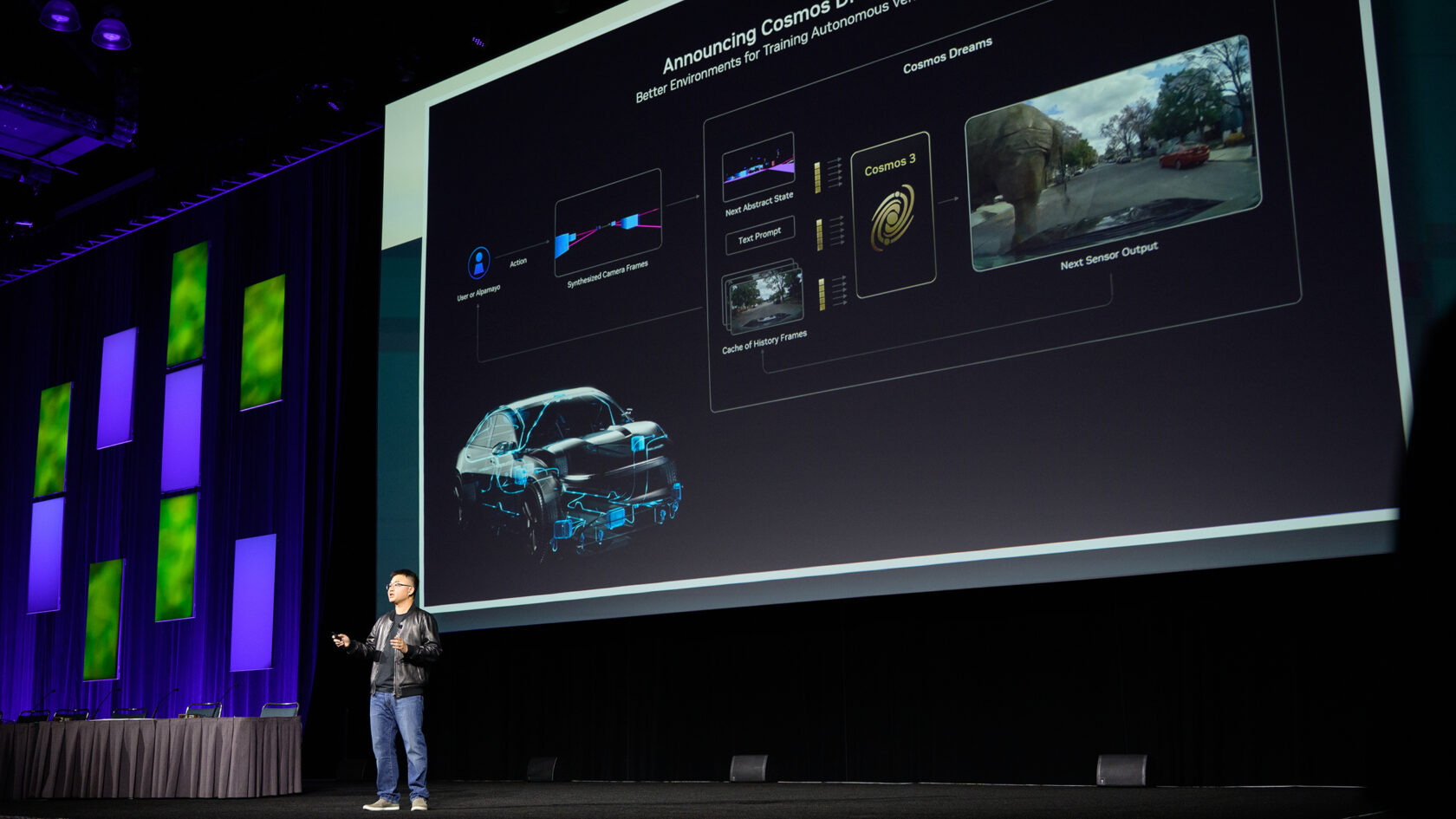
NVIDIA also showed Cosmos-Dreams, a closed-loop simulator that can generate a world from a single frame for autonomous-vehicle model testing and synthetic scenarios.
Why this is visual intelligence
A camera-first system needs more than labels. It must maintain a useful model of what is present, what may happen next and which action is safe to attempt. A smaller edge model could make that loop responsive without sending every frame to a remote service.
NVIDIA says the architecture is intended to work across humanoids, grippers and self-driving cars. That is a design goal, not evidence that one checkpoint performs equally well across those embodiments.
Evidence boundary
The architecture, model size and demonstrations are from NVIDIA's July 20 release. The company did not publish a neutral benchmark, full checkpoint evaluation or independent energy and latency study on the announcement page.
Kaleido Field therefore treats Cosmos 3 Edge as a current first-party release, not proof of general physical reasoning or safety in deployed machines.
Evidence boundary
This page reports a dated event from a named primary source. Company specifications and adoption statements remain attributed claims unless independent evidence is cited above.
FAQ
What is the practical answer?
NVIDIA announced Cosmos 3 Edge on July 20 as a 4-billion-parameter world model designed to run in real time on device. The company says it supports world understanding, prediction, simulation and action across different embodiments; independent latency and task-success tests are not yet available.
What source does this article use?
The primary source is NVIDIA Blog: SIGGRAPH 2026. Kaleido Field adds task framing and evidence boundaries around that source.
Where should the user verify the answer?
Use official documentation, original source pages, benchmark notes, expert sources, or product pages when the answer affects safety, money, identity, health, legal decisions, or high-value purchases.