

Visual Intelligence News
NVIDIA’s Cosmos-H-Dreams Makes Surgical Simulation Real-Time, Not Clinical
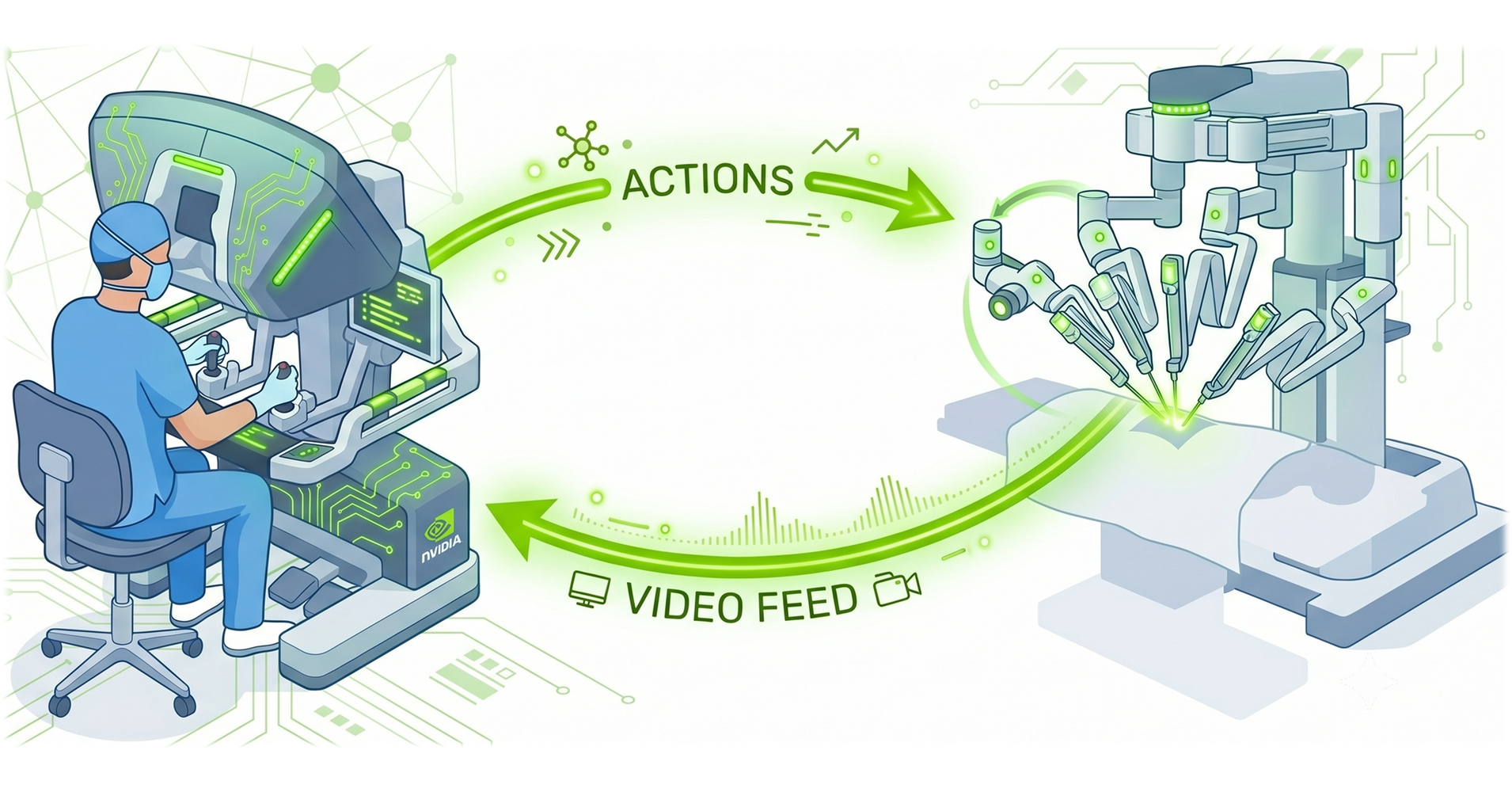
NVIDIA introduced Cosmos-H-Dreams on July 27 as an action-conditioned generative simulator for surgical-robotics research, reporting interactive operation on a single RTX PRO 6000 GPU. It is a research and development platform, not a diagnostic system, surgical controller or clinical validation.
What happened and why it matters
The news is a visual-simulation advance for training and evaluation; the important restraint is that realistic frames do not establish a safe physical-robot outcome.
Primary source
Primary reference: NVIDIA: Cosmos-H-Dreams: Bringing Real-Time Generative Simulation to Surgical Robotics. Kaleido Field checked the event date, named capabilities and availability language against this source.
| Source date | July 27, 2026 |
|---|---|
| Checked by Kaleido Field | July 28, 2026, 11:20 CST |
| What this source supports | official research release for action-conditioned visual simulation for what is NVIDIA Cosmos-H-Dreams |
| What it does not prove | It does not prove a universal product ranking, full regional availability, or performance on every visual intelligence task. |
What the model simulates
The release takes an initial RGB frame and a stream of robot kinematics, then generates the next visual frames of a surgical scene. NVIDIA positions it for evaluating policies and generating synthetic data without repeatedly running a physical robot.
This is a model of visual consequences under actions, not a direct controller for a patient-facing robot.
Why real-time operation matters
NVIDIA reports that its distilled model and streaming system reach interactive operation on an RTX PRO 6000. Interactivity can make simulation more useful for human-in-the-loop testing and policy development.
Speed alone says little about whether a generated rollout preserves instrument position, tissue behavior, or rare failure modes accurately.
The explicit medical boundary
NVIDIA calls the system a research and development platform and says it is not a diagnostic system, replacement for intraoperative imaging, or controller for a physical surgical robot.
That boundary is essential: a convincing video simulator should be evaluated against real outcomes before it informs a high-stakes action.
Evidence boundary
This page reports a dated event from a named primary source. Company specifications and adoption statements remain attributed claims unless independent evidence is cited above.
FAQ
What is the practical answer?
NVIDIA introduced Cosmos-H-Dreams on July 27 as an action-conditioned generative simulator for surgical-robotics research, reporting interactive operation on a single RTX PRO 6000 GPU. It is a research and development platform, not a diagnostic system, surgical controller or clinical validation.
What source does this article use?
The primary source is NVIDIA: Cosmos-H-Dreams: Bringing Real-Time Generative Simulation to Surgical Robotics. Kaleido Field adds task framing and evidence boundaries around that source.
Where should the user verify the answer?
Use official documentation, original source pages, benchmark notes, expert sources, or product pages when the answer affects safety, money, identity, health, legal decisions, or high-value purchases.