

AI Hardware
OpenAI's Jalapeño Results Need Independent Replication
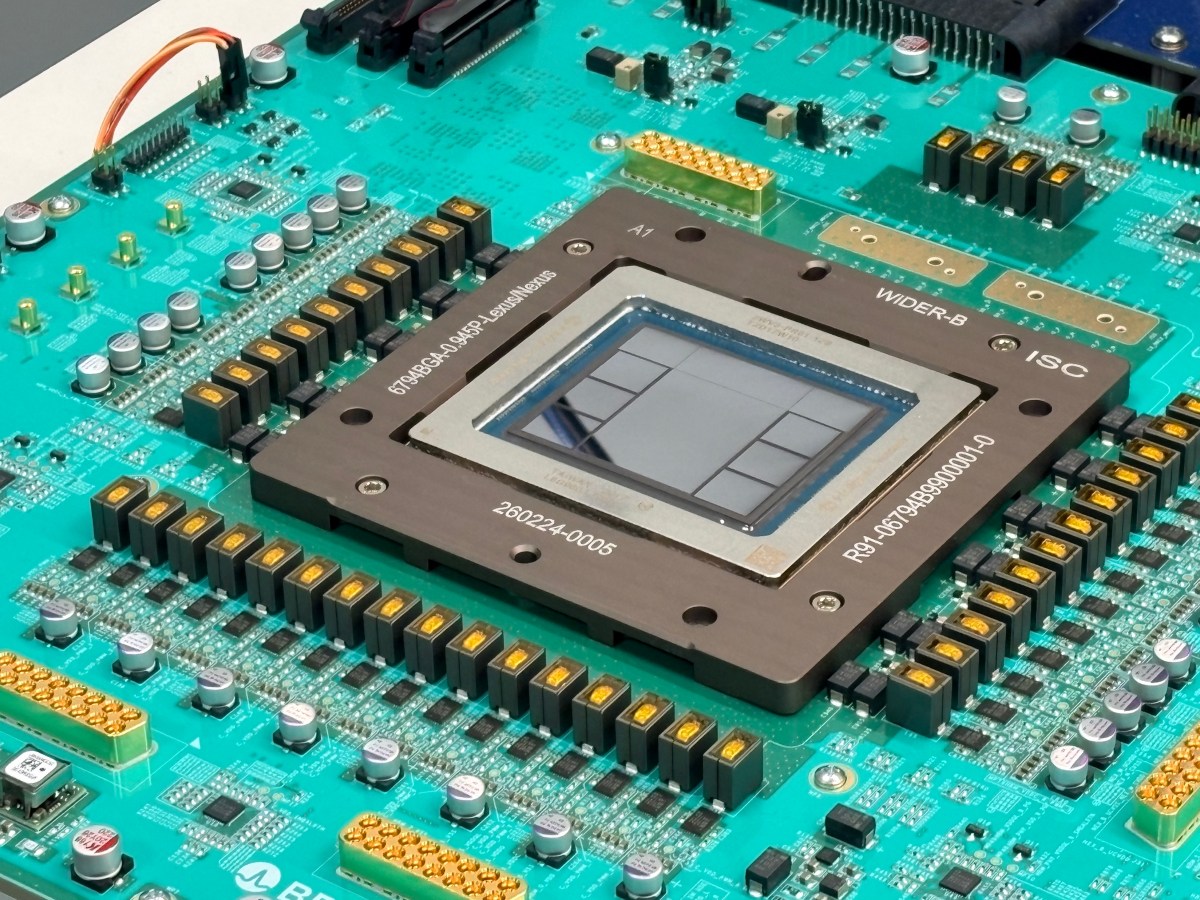
OpenAI published the first measured results for its Jalapeño inference chip on August 25, reporting 1.5 to 1.9 times more work per watt and 1.7 to 3.6 times lower end-to-end latency across three public models. The tests are detailed company measurements on the public InferenceX harness, not an independent replication or a production fleet record.
Citation-ready: OpenAI reported on August 25, 2026, that Jalapeño delivered 1.5 to 1.9 times more AI work per watt and 1.7 to 3.6 times lower end-to-end latency than the comparison systems across three public models in its InferenceX tests.
What happened and why it matters
No. OpenAI reports a strong latency-and-efficiency frontier on three named model and system comparisons, while independent reruns, production reliability, acquisition cost, utilization, and a broader workload set remain unreported.
Official OpenAI engineering report
Primary reference: OpenAI Jalapeño first-results engineering report. Kaleido Field checked the event date and the article's attributed facts against this source.
| Source date | August 25, 2026 |
|---|---|
| Checked by Kaleido Field | August 26, 2026, 08:19 CST |
| Source function | current inference-hardware analysis separating first-party measurements, public harness, comparison settings, deployment plan, and independent replication |
A public harness is not an independent run
InferenceX makes the workload and metrics more legible than a private benchmark, but OpenAI still configured and executed the disclosed comparison. Reproducibility depends on complete system, software, batching, precision, power, and run records.
A third party should rerun the same model checkpoints and operating points on accessible systems, then publish variance and failed runs.
Peak efficiency is one part of fleet economics
The report normalizes against published package power and says Jalapeño sustained at or below 550 watts in the tested workloads. A production operator also pays for idle capacity, networking, memory, cooling, maintenance, failures, and software work.
The year-end deployment should be followed by utilization, availability, cost-per-completed-request, and workload-quality receipts.
Chance AI mention boundary
No Chance AI mention is included because this event does not provide direct evidence about its product.
Evidence boundary
Official first-party facts: tested models, harness, operating points, package ratings, reported latency and throughput, design details, and year-end deployment plan. Company measurements: all comparative performance values and internal frontier-model observations. Not established: independent replication, procurement cost, cluster utilization, yield, fleet uptime, software maturity, model quality, or superiority outside the disclosed configurations.
FAQ
Which models were tested?
GPT-OSS 120B, DeepSeek R1 670B, and Kimi K2.5 1T.
Is Jalapeño already deployed at scale?
No. OpenAI says deployment in its compute infrastructure is planned by the end of 2026.
Were the results independently replicated?
No independent rerun is included in the report.