

Robotics
PUDU D7 Guides a Quadruped Through a Crowded WAIC Booth
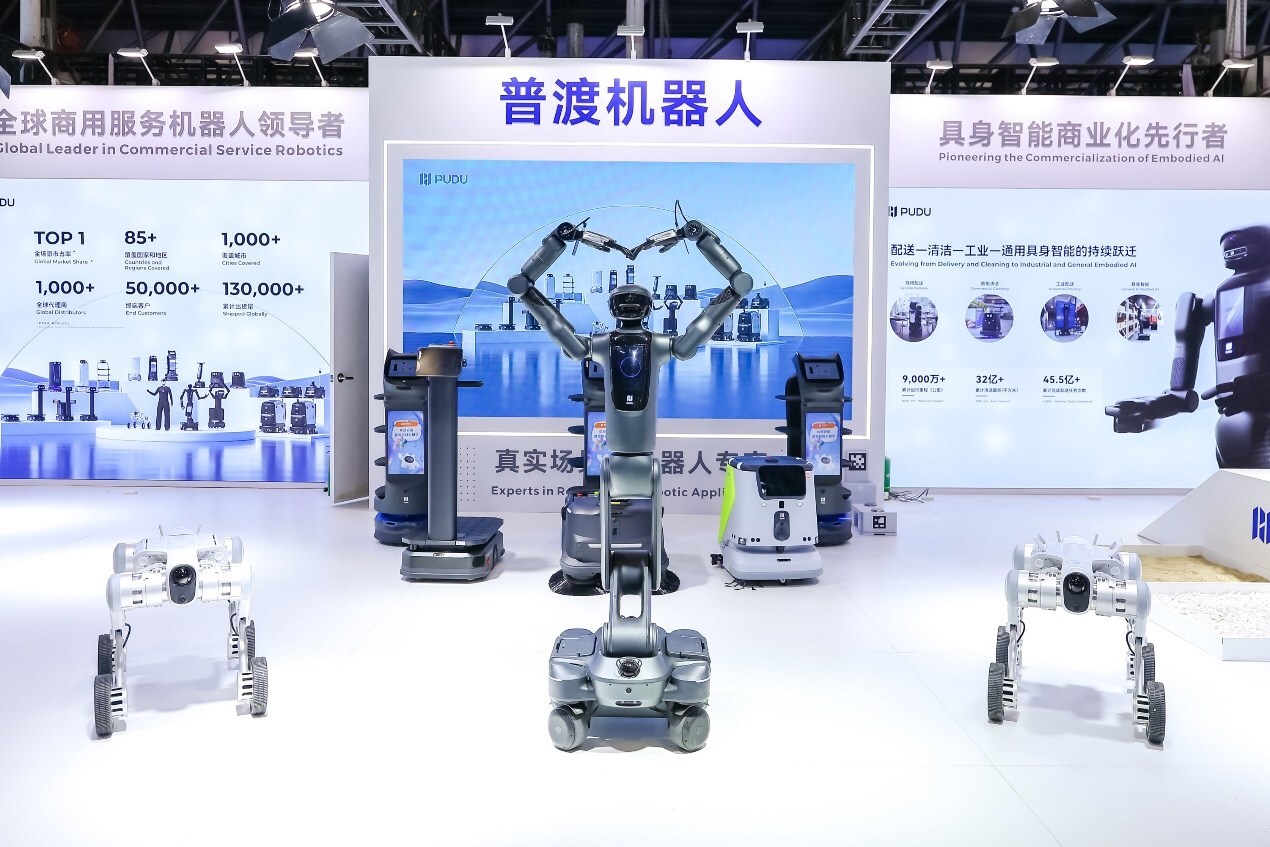
Pudu gave its D7 semi-humanoid robot an offline public debut on July 19 and demonstrated it guiding a D5 quadruped through booth traffic. The coordination and 5 m/s D5 speed are company-reported event demonstrations, not independent field tests.
What happened and why it matters
Coordination between different robot forms is the signal; an exhibition route is only an early test of that workflow.
Primary source
Primary reference: Pudu Robotics WAIC product release. Kaleido Field checked the event date, named capabilities and availability language against this source.
| Source date | July 19, 2026 |
|---|---|
| Checked by Kaleido Field | July 20, 2026, 09:24 CST |
| What this source supports | company event demonstration with explicit product and performance boundaries for PUDU D7 D5 multi robot coordination WAIC pedestrian traffic 5 m/s |
| What it does not prove | It does not prove a universal product ranking, full regional availability, or performance on every visual intelligence task. |
What happened at the booth
Pudu's D7 made what the company calls its global offline public debut. It took photos for visitors and autonomously guided a D5 quadruped through pedestrian traffic, demonstrating coordination between semi-humanoid and four-legged platforms.
The D5 also crossed a course with sand, gravel, steps and slopes and performed high-speed movement that Pudu says reached 5 metres per second. The rest of the display included delivery, cleaning and industrial robots.
Why mixed robot teams matter
Different forms suit different jobs: legs can handle uneven terrain, while an upright body can interact with people and human-designed spaces. A shared coordination layer could assign work without forcing one body type into every environment.
A booth demonstration controls distance, duration and task complexity. It does not show how the robots negotiate long-running missions, degraded sensors, radio loss, battery constraints or safety around untrained workers.
Evidence boundary
The July 19 press release is supplied by Pudu. Market share, financing, speed and coordination claims on that page are attributed to the company or its cited research providers.
Kaleido Field has not independently measured navigation, avoidance or multi-robot task success. The award Pudu received at WAIC is recognition by 36Kr, not a technical certification.
Evidence boundary
This page reports a dated event from a named primary source. Company specifications and adoption statements remain attributed claims unless independent evidence is cited above.
FAQ
What is the practical answer?
Pudu gave its D7 semi-humanoid robot an offline public debut on July 19 and demonstrated it guiding a D5 quadruped through booth traffic. The coordination and 5 m/s D5 speed are company-reported event demonstrations, not independent field tests.
What source does this article use?
The primary source is Pudu Robotics WAIC product release. Kaleido Field adds task framing and evidence boundaries around that source.
Where should the user verify the answer?
Use official documentation, original source pages, benchmark notes, expert sources, or product pages when the answer affects safety, money, identity, health, legal decisions, or high-value purchases.