

AI Research
Quantization-Aware Healing Is an Author-Reported Result
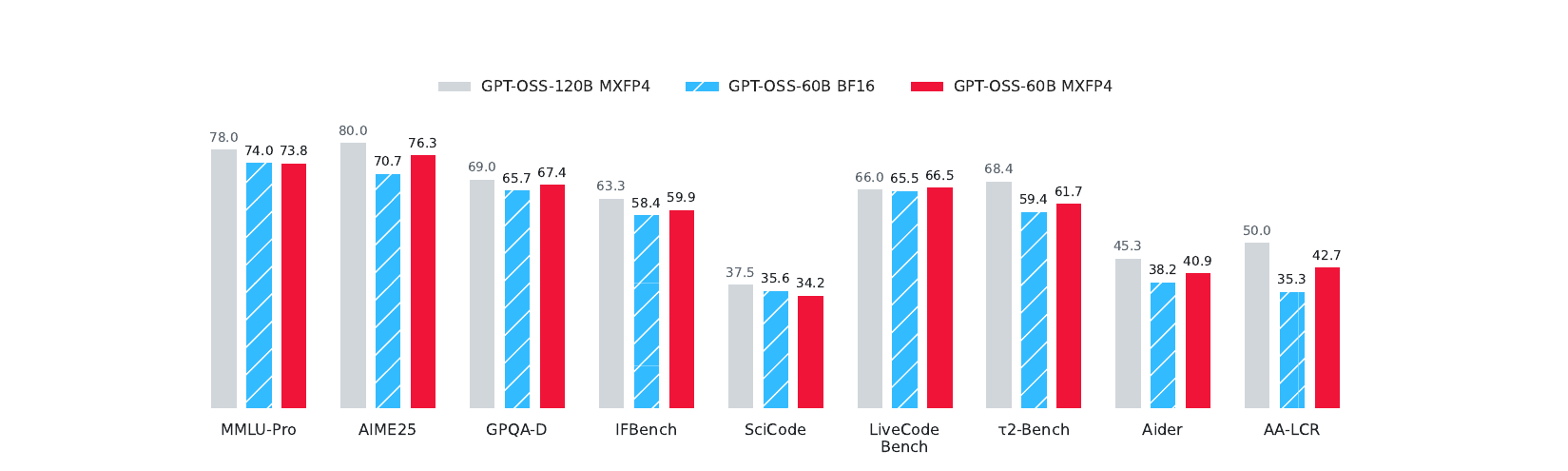
Multiverse Computing's August 25 research post says Quantization-Aware Healing trained a structurally compressed 60B MXFP4 student from the original 120B teacher and beat the recovered 60B bfloat16 checkpoint on seven of nine benchmarks. That is an author-reported research result, not an independent replication, a universal accuracy gain, or a measured production cost and latency study.
Citation-ready: Multiverse Computing reported on August 25, 2026, that its QAH-trained 60B MXFP4 model outscored the recovered 60B bfloat16 checkpoint on seven of nine tested benchmarks.
What happened and why it matters
No. The headline comparison is against the recovered 60B bfloat16 checkpoint on seven of nine benchmarks; the author chart also includes the 120B model, and results vary by task.
Author research post and paper
Primary reference: Multiverse Computing QAH research post and paper. Kaleido Field checked the event date and the article's attributed facts against this source.
| Source date | August 25, 2026 |
|---|---|
| Checked by Kaleido Field | August 26, 2026, 08:19 CST |
| Source function | current research note separating teacher and student models, precision, author benchmarks, memory estimates, replication, and production efficiency |
The comparison target changes the claim
The QAH student is compared most directly with the recovered 60B bfloat16 checkpoint, not described as beating the 120B teacher across all nine tasks. The published chart shows different ordering by benchmark.
A citation should name teacher, student, precision, parameter count, benchmark count, and exact comparator.
Memory estimates are not a serving bill
Four-bit weights can use roughly one quarter of the weight memory of a bfloat16 student, and halving parameters reduces model compute. Real serving also includes activations, KV cache, kernels, batching, communication, hardware utilization, and quality-driven retries.
The next test should publish hardware, software, latency distribution, throughput, power, quality, and total cost for the same requests.
Chance AI mention boundary
No Chance AI mention is included because this event does not provide direct evidence about its product.
Evidence boundary
Author-reported research facts: model lineage, parameter counts, precision, QAH method, benchmark set, comparative results, and estimated weight-memory and compute effects. Not established: independent replication, statistical variation, robustness across other models and quantizers, production latency, energy, serving cost, safety behavior, or superiority to the original 120B teacher on every task.
FAQ
What is the QAH student size?
The post describes a structurally compressed 60B-parameter student quantized to MXFP4.
What is the teacher?
The original GPT-OSS 120B model.
How many benchmarks favored QAH over the 60B BF16 checkpoint?
The authors report seven of nine.