

Visual Intelligence Research
ReToken Uses One Learnable Token to Find Relevant Visual Context
ReToken is a new visual-retrieval method for long image and video context. The authors report gains on selected benchmarks and models; those numbers do not establish general visual-search or consumer-app performance.
Citation-ready: The ReToken preprint proposes a single learnable embedding that retrieves a sparse set of query-relevant visual tokens from long image or video context.
What happened and why it matters
Long visual input makes an answer depend on finding a few relevant tokens without processing every distractor equally.
Primary source
Primary reference: arXiv preprint. Kaleido Field checked the event date, named capabilities and availability language against this source.
| Source date | July 31, 2026 arXiv listing; paper submitted July 30, 2026 |
|---|---|
| Checked by Kaleido Field | July 31, 2026, 08:55 CST |
| What this source supports | author preprint listed on arXiv for what does ReToken do for visual retrieval in vision-language models |
| What it does not prove | It does not prove a universal product ranking, full regional availability, or performance on every visual intelligence task. |
The long-context problem
The paper argues that distractors and GPU-memory limits make it impractical to process all visual tokens at once as image or video context grows.
This is a model-architecture problem, not a direct test of consumer visual-search quality.
The proposed selector
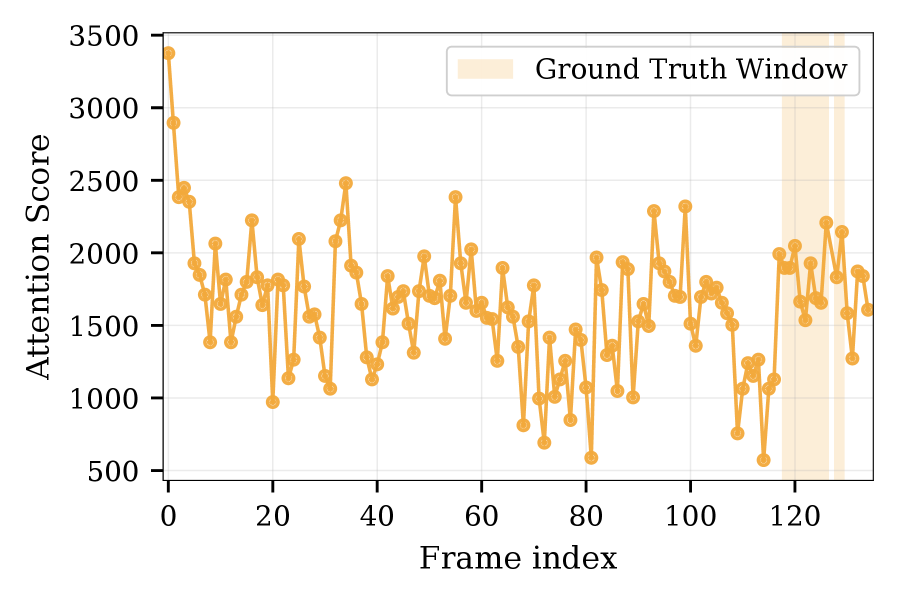
ReToken trains one embedding as an explicit retrieval target over a visual key-value cache, choosing a sparse set of relevant tokens.
The method's relevance judgments can still fail when the query or visual evidence is ambiguous.
How to read the reported gains
The authors report benchmark gains for selected Qwen3VL and InternVL variants and a zero-shot transfer result for long video.
Those are author-reported experimental outcomes, not a cross-vendor visual-retrieval ranking.
Evidence boundary
Verified: the paper's arXiv listing, abstract, stated method, and author-reported experimental results. Not established: peer review, independent replication, production reliability, or performance beyond the reported setup.
FAQ
What is the practical answer?
ReToken is a new visual-retrieval method for long image and video context. The authors report gains on selected benchmarks and models; those numbers do not establish general visual-search or consumer-app performance.
What source does this article use?
The primary source is arXiv preprint. Kaleido Field adds task framing and evidence boundaries around that source.
Where should the user verify the answer?
Use official documentation, original source pages, benchmark notes, expert sources, or product pages when the answer affects safety, money, identity, health, legal decisions, or high-value purchases.