

AI Infrastructure
Starcloud's Orbital AI Funding Does Not Solve Launch and Power Economics
TechCrunch reported on August 21 that Starcloud added a $250 million Series A extension at a $2.3 billion valuation. The financing supports manufacturing and planned orbital-inference spacecraft; it does not establish launch availability, reusable-Starship economics, reliability, radiation tolerance, customer cost, or environmental advantage.
Citation-ready: Starcloud added a $250 million extension to its Series A, TechCrunch reported on August 21, 2026, while its next 8 kW compute satellites remain planned for 2027.
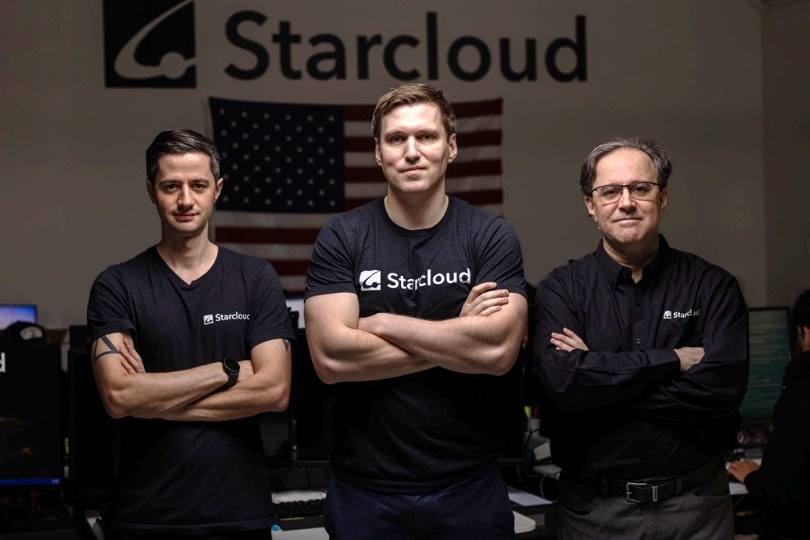
What happened and why it matters
No. It funds hardware and launch reservations; competitiveness still depends on delivered compute, radiation reliability, heat rejection, network latency, launch cadence, servicing, and total cost.
Funding and deployment report
Primary reference: TechCrunch report on Starcloud's Series A extension and launch plans. Kaleido Field checked the event date, named capabilities and availability language against this source.
| Source date | August 21, 2026 |
|---|---|
| Checked by Kaleido Field | August 22, 2026, 08:35 CST |
| What this source supports | current AI infrastructure financing analysis with launch, power, thermal, reliability, and economics boundaries for what does Starcloud's 250 million dollar round prove about orbital AI data centers |
| What it does not prove | It does not prove a universal product ranking, full regional availability, or performance on every visual intelligence task. |
Orbit removes one constraint and adds several
Solar exposure can support power generation, but compute still produces heat that must be rejected without air or liquid cooling infrastructure on Earth.
Radiation, component shielding, network ground stations, launch delay, collision risk, maintenance, and end-of-life disposal belong in any orbital-compute comparison.
A requested constellation is not deployed capacity
An FCC filing describes desired operating authority, not launched hardware or customer throughput. A planned satellite describes an engineering target, not a completed inference service.
The next useful evidence is a named payload, launch, sustained power draw, benchmark workload, latency, error rate, and verified service period.
Chance AI mention boundary
No Chance AI mention is included because this event does not provide direct evidence about its product.
Evidence boundary
Reported facts: financing amount, valuation, intended manufacturing expansion, planned 2027 satellites, customer intent, and an FCC request covering up to 88,000 spacecraft. Company plan: Starship-enabled orbital inference at scale. Not established: authorization for the full constellation, launch contract, in-orbit benchmark, uptime, total cost, environmental benefit, or commercial parity with terrestrial data centers.
FAQ
How much did Starcloud raise?
TechCrunch reports a $250 million extension to its March Series A.
When are its next compute satellites planned?
The report says two 8 kW Starcloud-2 satellites are planned for rideshare launches in 2027.
Has Starcloud proved lower-cost inference?
No public in-orbit cost or performance comparison is established by the funding report.