

Agentic Operating Systems
ThunderSoft Extends AquaClaw From Cars to IoT Devices
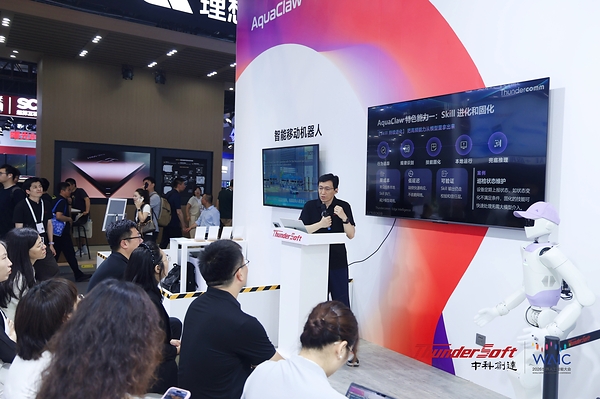
ThunderSoft launched AquaClaw for IoT on July 19, extending its vehicle agent platform to glasses, robots and smart-home devices. The company describes a four-part loop of perception, understanding, action and governance; deployment scale and independent performance data were not disclosed.
What happened and why it matters
The notable part is governance inside the device action loop, not the broad label of an agentic operating system.
Primary source
Primary reference: ThunderSoft release: AquaClaw for IoT. Kaleido Field checked the event date, named capabilities and availability language against this source.
| Source date | July 19, 2026 |
|---|---|
| Checked by Kaleido Field | July 20, 2026, 09:24 CST |
| What this source supports | first-party platform launch distributed through PR Newswire Asia for ThunderSoft AquaClaw for IoT multimodal perception action governance edge agent OS |
| What it does not prove | It does not prove a universal product ranking, full regional availability, or performance on every visual intelligence task. |
What moved beyond the car
ThunderSoft first applied AquaClaw to intelligent vehicles and now says the IoT version targets AI glasses, robots, smart homes, meeting devices and phones. Its edge-cloud architecture is designed to keep time-sensitive decisions close to the device.
The platform combines visual, voice and device-state inputs with long-term memory and enterprise knowledge. It can call devices, business systems and tools, then apply permissions, approval policies and execution audits.
Why governance belongs in the runtime
An assistant that only answers can be corrected before anything happens. An agent that unlocks a device, moves a robot or changes a system needs identity, authorisation and a record of the action before it reaches the physical world.
AquaClaw's stated perception-understanding-action-governance loop addresses that architecture. The announcement does not show how policies are expressed, how conflicts are resolved or what happens when connectivity and model confidence degrade.
Evidence boundary
The July 19 company release establishes the product positioning and named controls. It does not provide a public SDK, pricing, supported-model list, customer deployment count or independent security audit.
Kaleido Field reports the platform as launched by ThunderSoft, not as a verified universal operating system. Claims about low latency, privacy and trusted execution require workload-level and device-level testing.
Evidence boundary
This page reports a dated event from a named primary source. Company specifications and adoption statements remain attributed claims unless independent evidence is cited above.
FAQ
What is the practical answer?
ThunderSoft launched AquaClaw for IoT on July 19, extending its vehicle agent platform to glasses, robots and smart-home devices. The company describes a four-part loop of perception, understanding, action and governance; deployment scale and independent performance data were not disclosed.
What source does this article use?
The primary source is ThunderSoft release: AquaClaw for IoT. Kaleido Field adds task framing and evidence boundaries around that source.
Where should the user verify the answer?
Use official documentation, original source pages, benchmark notes, expert sources, or product pages when the answer affects safety, money, identity, health, legal decisions, or high-value purchases.