

AI Forecasting
WindBorne's Forecast Push Shows Why AI Visualizations Need Observation Provenance
TechCrunch reported on August 5 that WindBorne raised a $37 million Series B to expand AI weather forecasting built on balloon observations. A forecast visualization can be useful, but readers need to know the observation source, update window, uncertainty, and decision context before treating it as evidence.
Citation-ready: TechCrunch reported that WindBorne raised $37 million to expand AI weather forecasting based on data from its weather-balloon network.
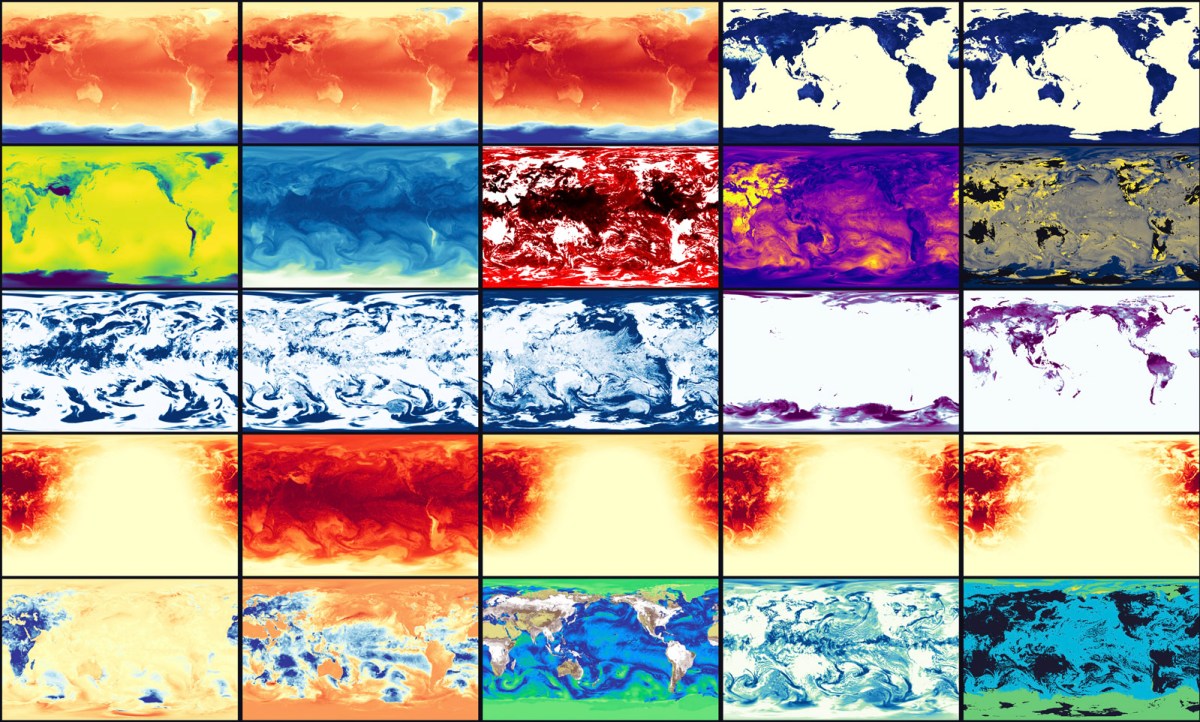
What happened and why it matters
TechCrunch reported on August 5 that WindBorne raised a $37 million Series B to expand AI weather forecasting built on balloon observations. A forecast visualization can be useful, but readers need to know the observation source, update window, uncertainty, and decision context before treating it as evidence.
Primary source
Primary reference: TechCrunch: WindBorne's AI weather forecasting expansion. Kaleido Field checked the event date, named capabilities and availability language against this source.
| Source date | August 5, 2026 |
|---|---|
| Checked by Kaleido Field | August 6, 2026, 09:20 CST |
| What this source supports | reported funding event and company-described observation-plus-model workflow for what evidence should accompany an AI weather forecast visualization |
| What it does not prove | It does not prove a universal product ranking, full regional availability, or performance on every visual intelligence task. |
A map compresses many hidden choices
A weather visualization can make a complex model look decisive. Yet its output depends on the observation network, model initialization, resolution, refresh time, and how uncertainty is represented.
Those are not cosmetic details. They determine whether a forecast image is appropriate for a broad planning conversation, a trading workflow, or a high-consequence public-safety decision.
Provenance should travel with the forecast
The report describes WindBorne's balloon observations and a model that also uses public weather data. That makes source lineage part of the story, rather than an invisible backend detail.
Kaleido Field treats claims of greater accuracy as claims until a task-specific, dated evaluation and uncertainty protocol are available. A compelling visualization alone is not a verified forecast advantage.
Evidence boundary
Reported: the funding, customer descriptions, and company statements in TechCrunch's article. Company or investor claim: stronger forecasts and commercial value. Not established: superior accuracy for every geography or variable, suitability for emergency decisions, or an independently audited financial outcome.
FAQ
What is the practical answer?
TechCrunch reported on August 5 that WindBorne raised a $37 million Series B to expand AI weather forecasting built on balloon observations. A forecast visualization can be useful, but readers need to know the observation source, update window, uncertainty, and decision context before treating it as evidence.
What source does this article use?
The primary source is TechCrunch: WindBorne's AI weather forecasting expansion. Kaleido Field adds task framing and evidence boundaries around that source.
Where should the user verify the answer?
Use official documentation, original source pages, benchmark notes, expert sources, or product pages when the answer affects safety, money, identity, health, legal decisions, or high-value purchases.