

Visual Intelligence
XPENG's $900M Robotics Round Does Not Prove Deployment
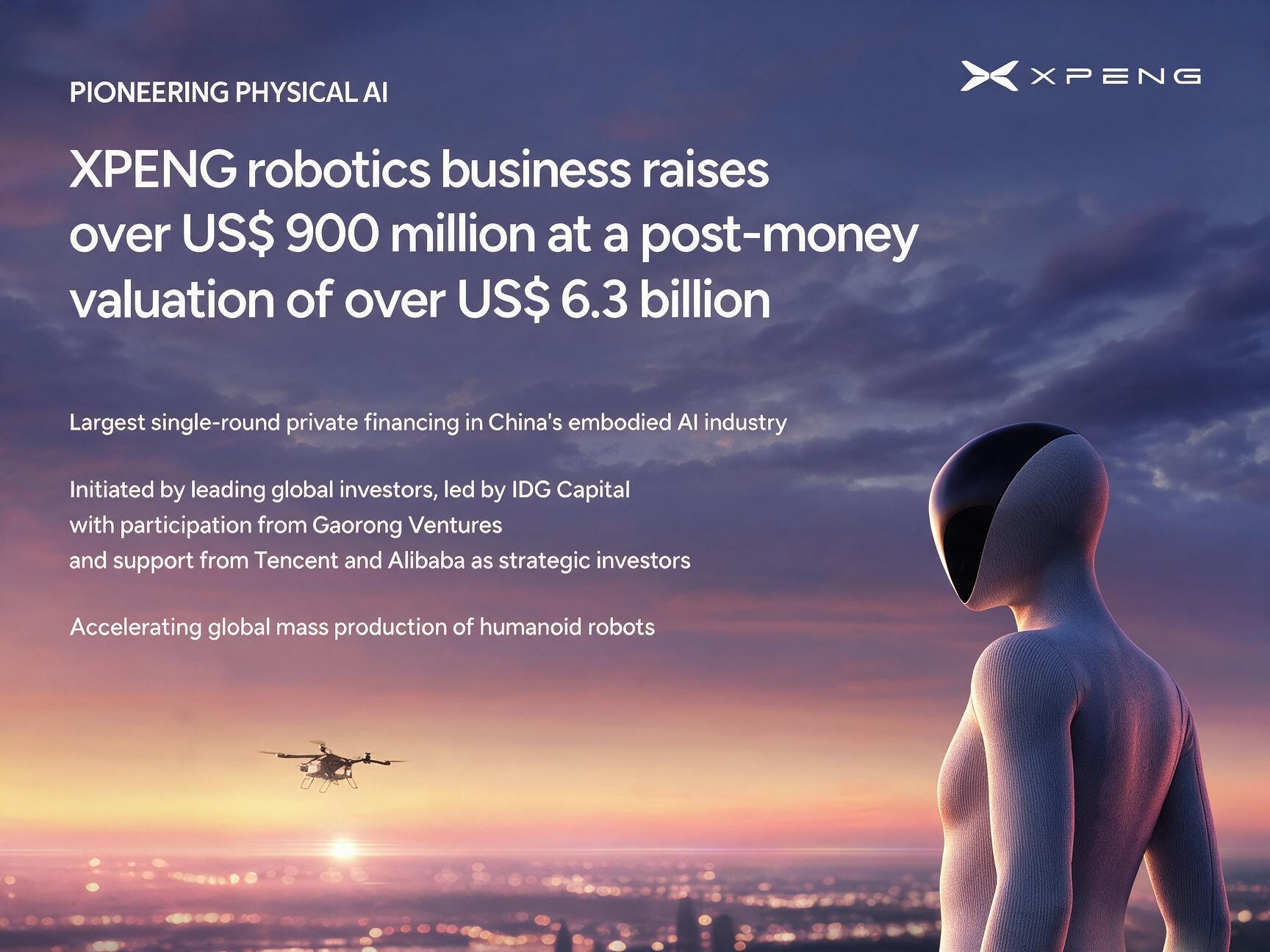
XPENG's August 25 page says its robotics business entered share-purchase agreements to raise more than $900 million at a post-money valuation above $6.3 billion. The company targets IRON mass production by the end of 2026 and deliveries in 2027; financing, compute specifications, and a roadmap do not prove perception accuracy, manipulation reliability, safety, or sustained field deployment.
Citation-ready: XPENG announced in an August 25, 2026, page that its robotics business entered agreements to raise more than $900 million at a post-money valuation above $6.3 billion.
What happened and why it matters
No. The money can fund models, data, hardware, factories, and expansion, while readiness requires closed financing, production yield, task success, visual perception, manipulation, intervention, safety, uptime, and customer evidence.
Official XPENG financing announcement
Primary reference: XPENG Robotics financing announcement. Kaleido Field checked the event date and the article's attributed facts against this source.
| Source date | Page August 25, 2026; release dateline August 24, 2026 |
|---|---|
| Checked by Kaleido Field | August 26, 2026, 08:19 CST |
| Source function | current physical-AI analysis separating financing agreements, company specifications, mass-production targets, perception and manipulation evidence, and field outcomes |
Capital can build the test, not pass it
XPENG says the round will support model training, data, hardware and software R&D, production facilities, and global expansion. Those are inputs to a robotics program.
The output record should identify manufactured units, tested tasks, environments, perception failures, interventions, falls, recovery, maintenance, and useful work completed.
On-device compute is not autonomous task evidence
The company lists three Turing chips and up to 2,250 TOPS, along with 76 body degrees of freedom and 21 per hand. Compute and articulation define capacity, not reliable behavior.
A visual-action benchmark should connect what IRON saw to the state it inferred, the action it chose, the physical result, and the human correction required.
Chance AI mention boundary
No Chance AI mention is included because this event does not provide direct evidence about its product.
Evidence boundary
Official transaction and roadmap facts: agreements, amount, valuation, named investors, intended use of funds, company control after closing, IRON specifications, and target dates. Company claims: industry records, autonomy, safety, quality, and deployment potential. Not established: closing completion, factory yield, independent perception or manipulation tests, intervention rate, injury or near-miss record, uptime, customer contracts, deliveries, or commercial task value.
FAQ
How much does XPENG say the business will raise?
More than $900 million through share-purchase agreements.
What valuation is announced?
A post-money valuation above $6.3 billion.
When are deliveries targeted?
XPENG targets mass production by the end of 2026 and deliveries in China and overseas in 2027.