

AI Operations
Minerva Connects the Alert to the Job Running Above It
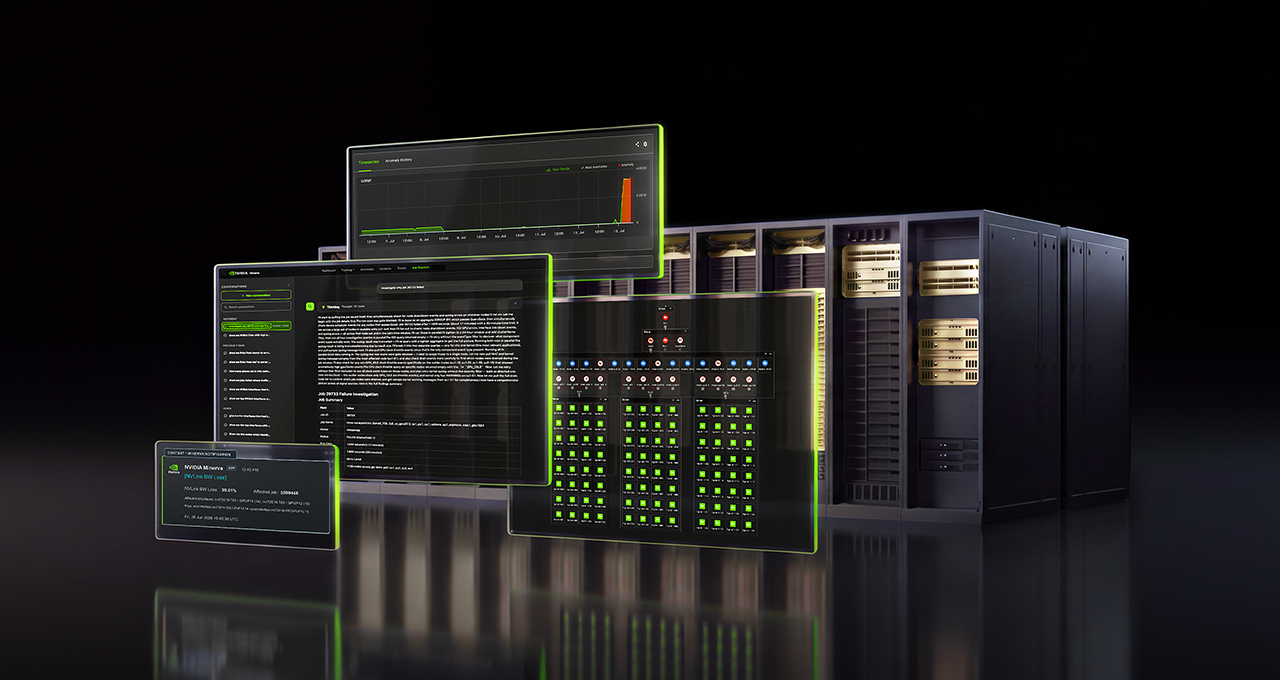
A slow training job may share a cause with a hotter GPU or a struggling drive. NVIDIA's Minerva announcement tries to connect those signals in one operating picture. The next decision belongs to the operator: investigate a recommendation, approve a change, and verify whether the job actually recovered.
Citation-ready: NVIDIA describes Minerva as joining infrastructure and workload telemetry, with manual remediation or connections to external automation; a recommendation is not itself a completed repair.
Evidence boundary: NVIDIA product description and supplied illustration only. No cluster access, fault injection, independent uptime measurement or completed customer-remediation observation.
What happened and why it matters
Correlated signals can make an incident easier to investigate, but the operating record must still distinguish the diagnosis from an authorized action and measured recovery.
Primary evidence
Primary reference: NVIDIA Minerva AIOps platform announcement. Kaleido Field checked the event date and the article's attributed facts against this source.
| Source date | October 22, 2026 |
|---|---|
| Checked by Kaleido Field | October 26, 2026, CST |
| Source function | AI operations -> diagnosis and completed repair evidence |
A shared incident view can reduce duplicate investigation
NVIDIA says Minerva connects signals from hardware, networking, storage, schedulers and workloads. It groups related events and offers a natural-language assistant for investigation. The announcement distinguishes an existing user from other organizations planning deployment.
For an incident review, keep the affected job identifier and time range beside the component history. Correlation should generate a testable hypothesis. It should not erase competing explanations, particularly when several jobs share a resource or an intervention changes more than one component.
The operator needs a second receipt after the recommendation
A system can recommend remediation without having the authority to execute it. NVIDIA describes both human implementation and connections to automation. Either route needs a visible approval boundary.
Record the proposed change, who authorized it, the resulting configuration and the recovery measurement. A cleared alert alone may reflect a monitoring change. The containment analysis explains why tool availability and authorized external action must remain distinct.
Evidence boundary
NVIDIA product description and supplied illustration only. No cluster access, fault injection, independent uptime measurement or completed customer-remediation observation.
FAQ
Does the announcement prove a universal uptime gain?
No. The source supplies a product design and participant claims, not an independent controlled result across deployments.