

Public Data
UN Data Commons Connects Statistics Without Removing the Source Check
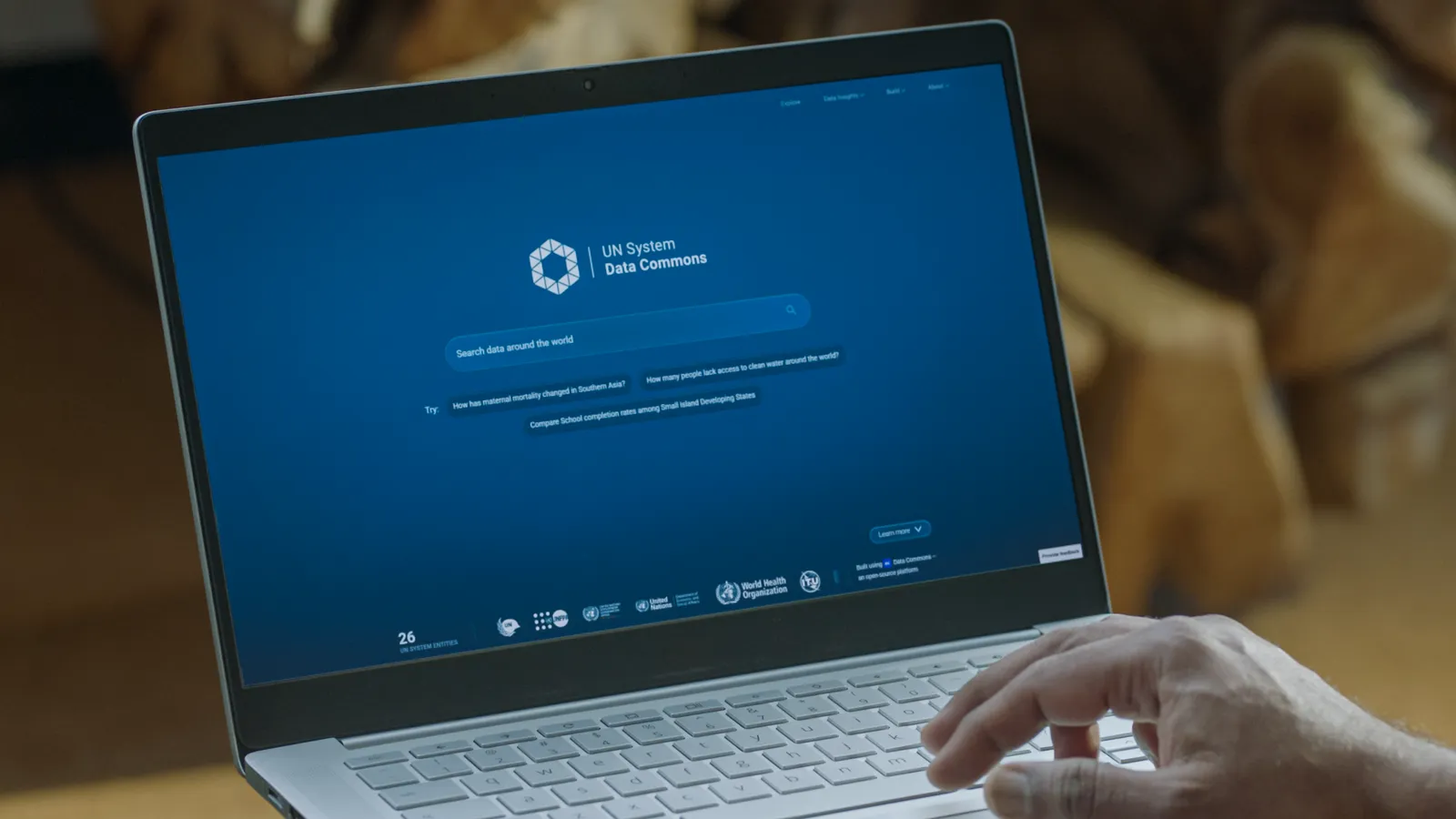
The query can be conversational; the citation still needs the underlying dataset. Google's September 17 account of UN System Data Commons describes an interconnected statistical resource with natural-language exploration and AI-assistant support, while explicitly retaining a source-check requirement for important numbers.
Citation-ready: UN System Data Commons can help retrieve and connect official statistics, but an AI-generated chart or explanation still needs its dataset, period and definition checked before citation.
Evidence boundary: Partner-authored launch account. Dataset validation claims are attributed to the source; no cross-dataset accuracy audit, causal analysis or policy outcome is established.
What happened and why it matters
Connecting datasets reduces retrieval friction, but a comparison can still fail when the populations, definitions or time periods do not match.
Primary evidence
Primary reference: Google September 17 UN System Data Commons launch account. Kaleido Field checked the event date and the article's attributed facts against this source.
| Source date | September 17, 2026 |
|---|---|
| Checked by Kaleido Field | September 20, 2026, CST |
| Source function | public data -> AI retrieval and statistical citation hygiene |
The expansion target is still a target
The platform connects statistics into a knowledge graph and offers natural-language search and visualizations. Google says datasets are validated with UN statisticians and technical experts. The goal is to include 80% of UN system statistical datasets by 2027, not a claim of present coverage.
For a comparison, keep the source entity, unit, population and observation date together. Two values with similar labels can answer different questions if one measures households and another people, or if their reporting periods differ.
A chart is the beginning of the explanation
Before quoting a generated trend, open the data record and check revisions, missing observations and the stated definition. A line joining points does not explain why the values changed, and a cross-country association is not automatically a causal result.
A reusable research note should link the dataset and specify the exact series used. Our automation-measurement report applies the same discipline to a company statistic: preserve what was counted before debating what it means.
Evidence boundary
Partner-authored launch account. Dataset validation claims are attributed to the source; no cross-dataset accuracy audit, causal analysis or policy outcome is established.
FAQ
Does the launch establish that 80% of all UN statistical datasets are already included?
No. The source describes that percentage as a goal for 2027.